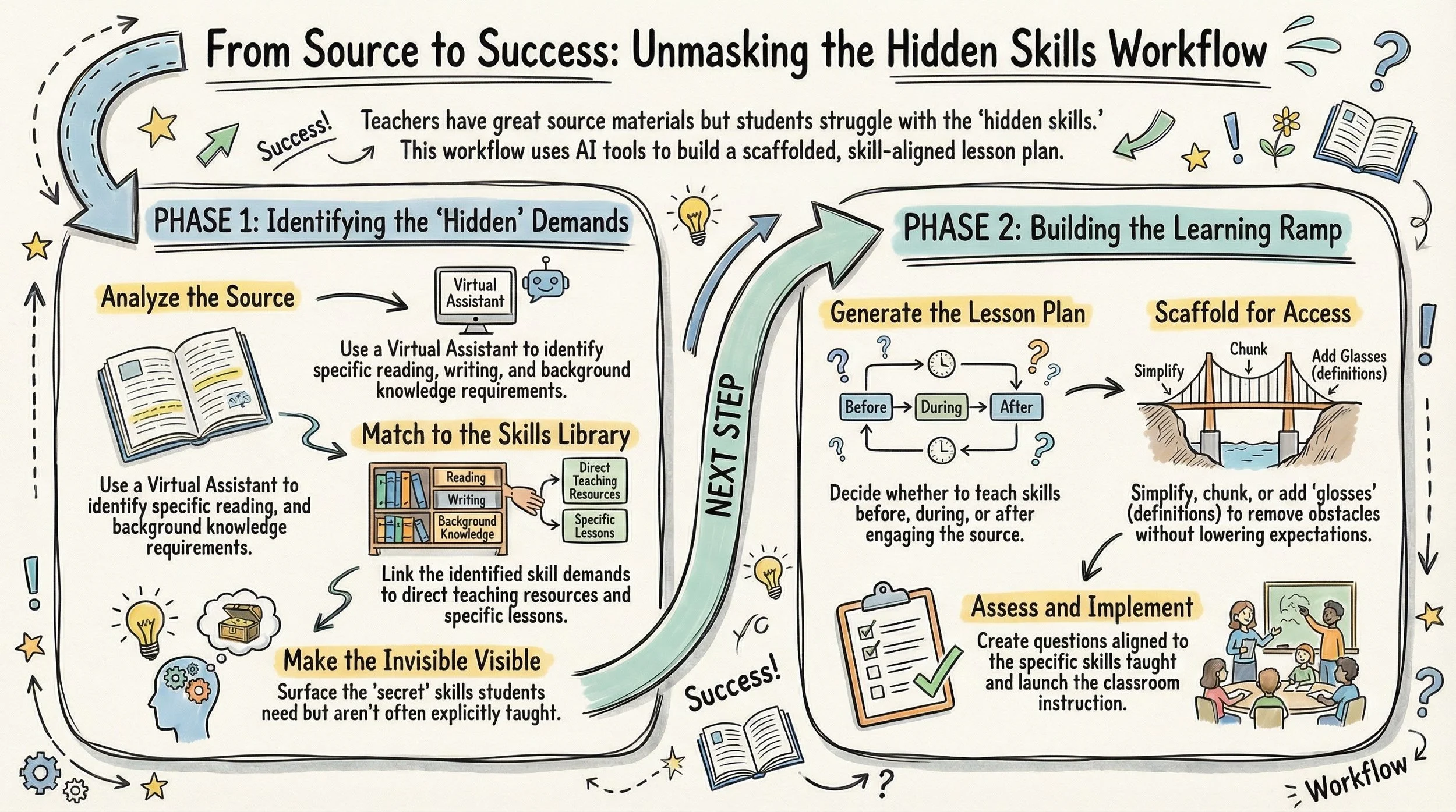
Imagine this: A teacher finds a strong article about the Montgomery Bus Boycott and wants to use it in class because the topic matters and the source is rich. But when she looks more closely, she realizes many of her students will struggle. The article assumes background knowledge they may not have. It uses complex sentences. It expects students to track an argument, notice key details, and understand why certain events mattered. The teacher knows the problem is not that the source is bad. The problem is that the skill demands are hidden, and if she teaches the article without uncovering them first, many students will miss the meaning.
This workflow solves that problem by helping the teacher move from source to instruction in a clear sequence. First, a virtual assistant analyzes the article and identifies the hidden demands inside it, such as background knowledge, close reading, tracing claims, or using evidence. Then those demands are matched to the Skills Library, where the teacher can find direct teaching support for the exact skills students need. Once the skills are visible, the teacher can generate a lesson plan, decide what needs to be taught before, during, or after reading, and scaffold the article by chunking it, simplifying difficult parts, or adding glosses and annotations. Finally, the teacher creates aligned questions or assessments based on those same skills. Instead of hoping students can “just do it,” the workflow turns a difficult source into a supported, skill-based path to success.