Workflow 2: A teacher has existing materials but needs to identify and teach the underlying skills
Mr. Chen is planning tomorrow’s lesson using an article he’s already taught before. The discussion questions are ready, and the activity usually goes fine—but every year, he notices the same issue: some students can participate, but many don’t actually understand how to analyze the text. They give surface-level answers, struggle to explain their thinking, or rely on stronger classmates.
He realizes the problem isn’t the content—it’s that he hasn’t made the underlying skills explicit.

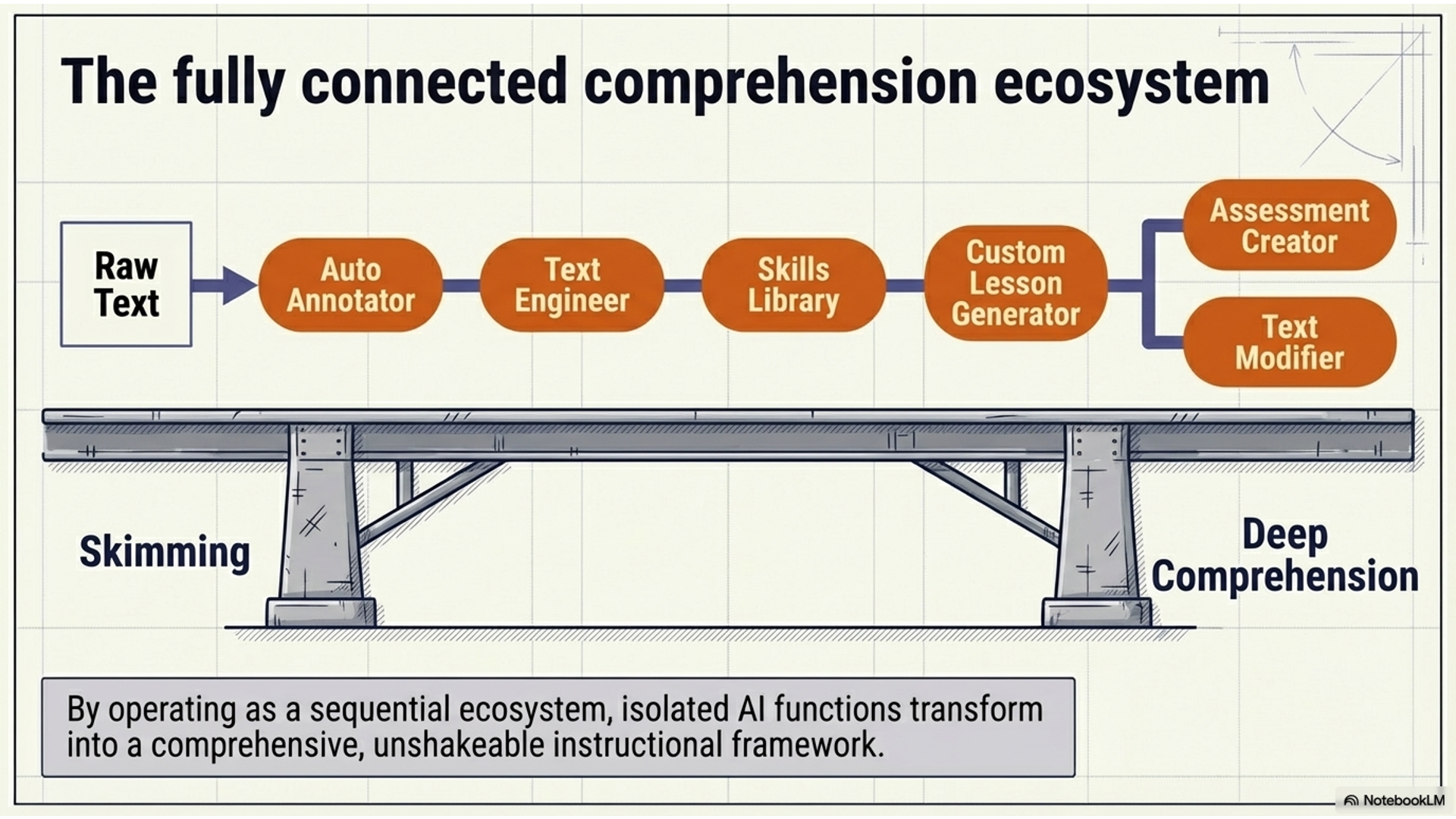
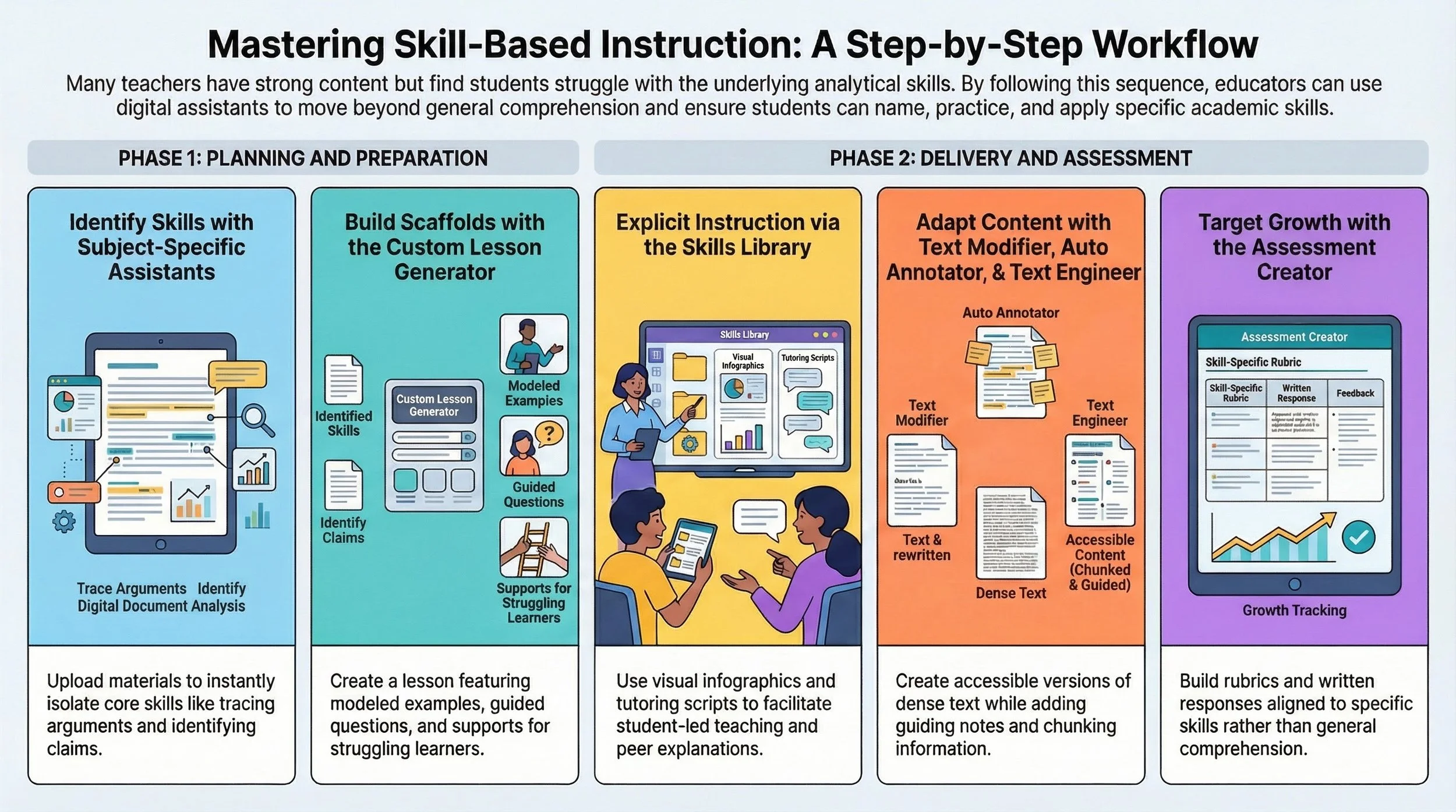
To fix that, he uploads the article into the Subject-Specific Assistants. Within seconds, it identifies the key skills students need: tracing an argument, identifying claims, and evaluating evidence. Now he has a clear target.
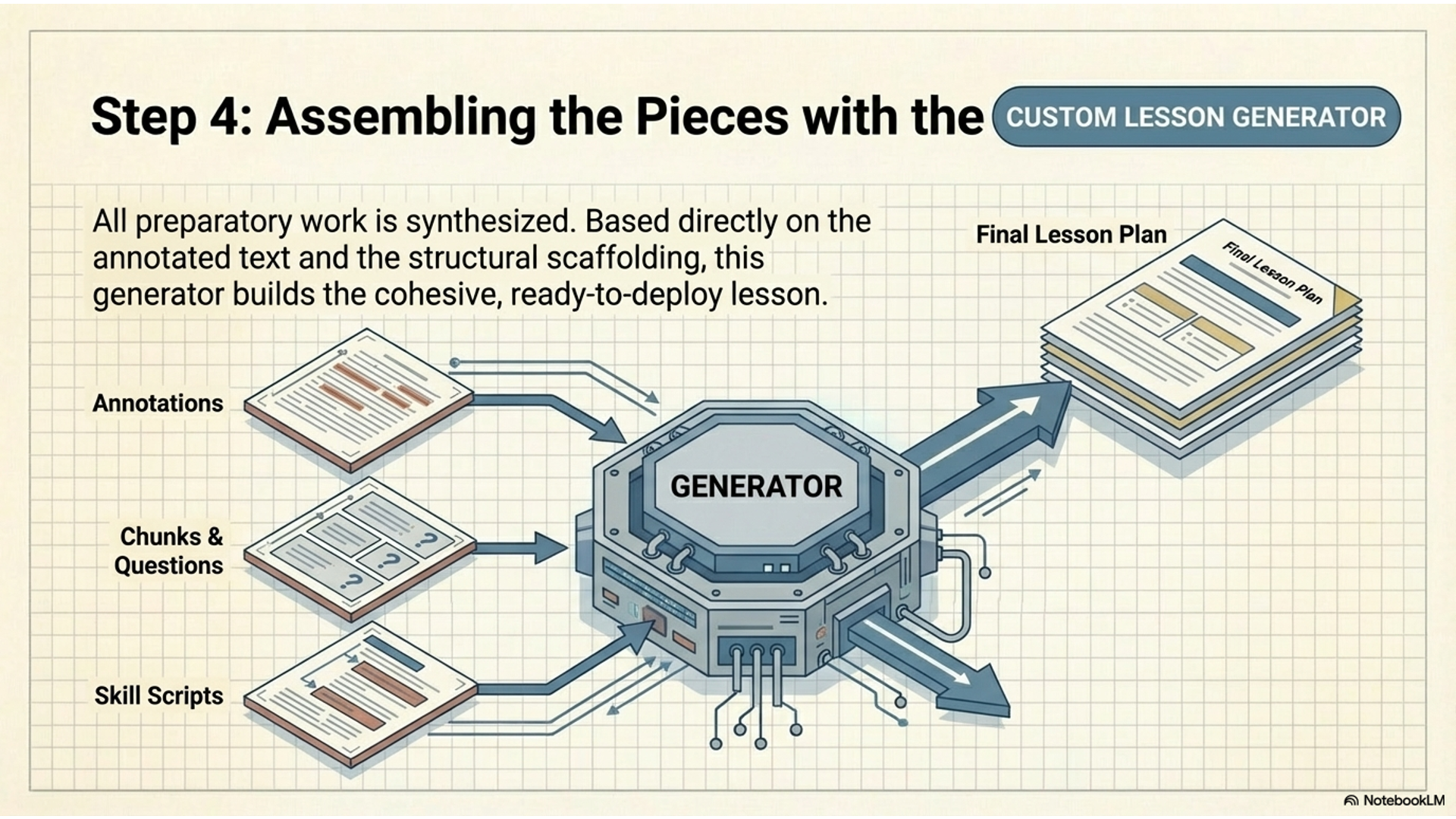
He takes those skills into the Custom Lesson Generator, which builds a structured lesson around them. Instead of just “read and discuss,” the lesson now includes a modeled example of identifying a claim, guided questions that walk students through evidence, and scaffolds for students who typically struggle.
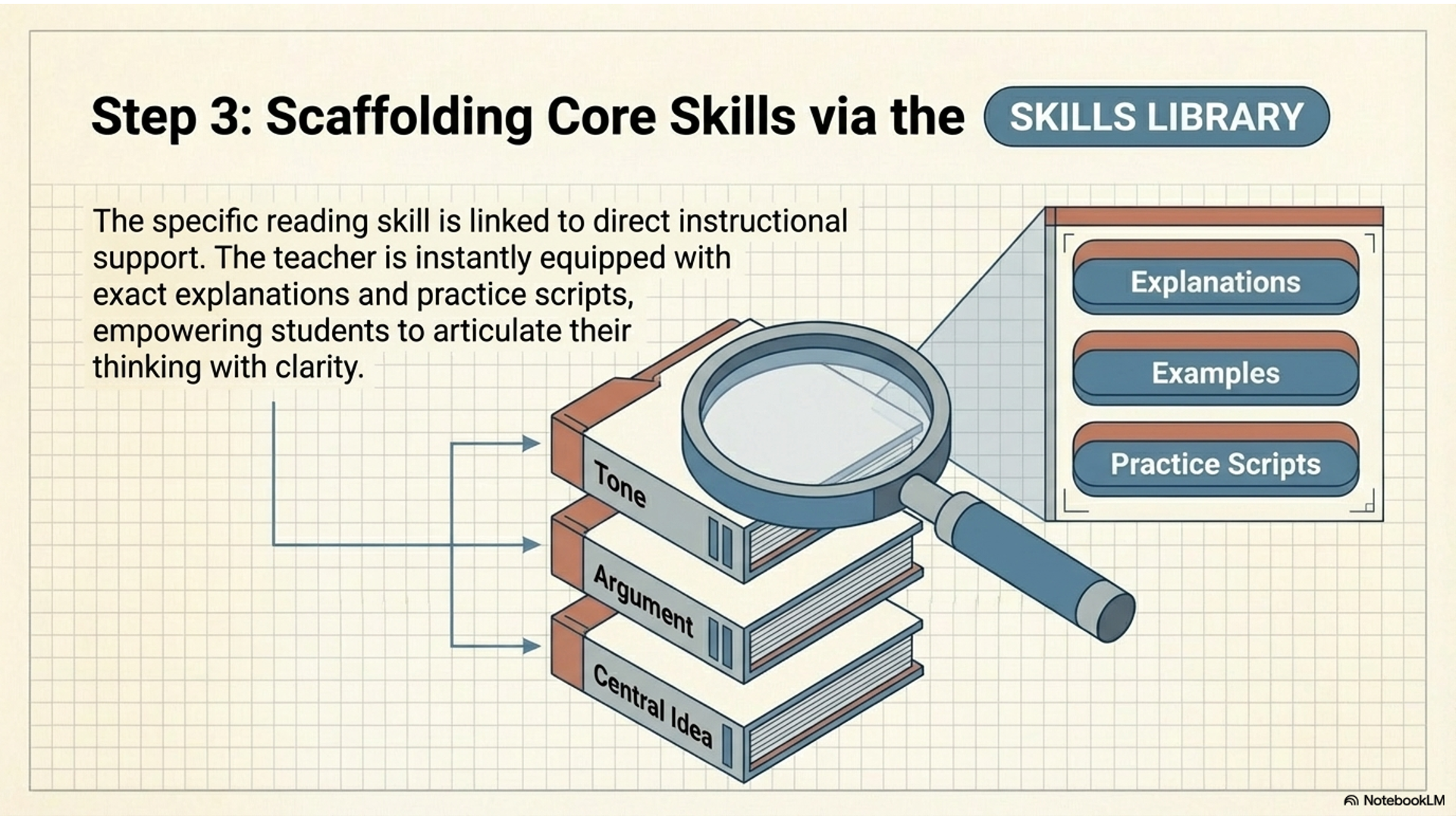
To make the skills stick, Mr. Chen turns to the Skills Library. He pulls up the infographic for “analyzing claims” and has a student come to the board to teach it to the class in their own words. Then he uses one of the tutoring scripts and has students do a pair-and-share, where they practice explaining the skill to each other step by step—almost like they’re the teacher.
For homework, he assigns the skill podcast and slides, so students hear the concept explained again in a different way and come back more prepared.
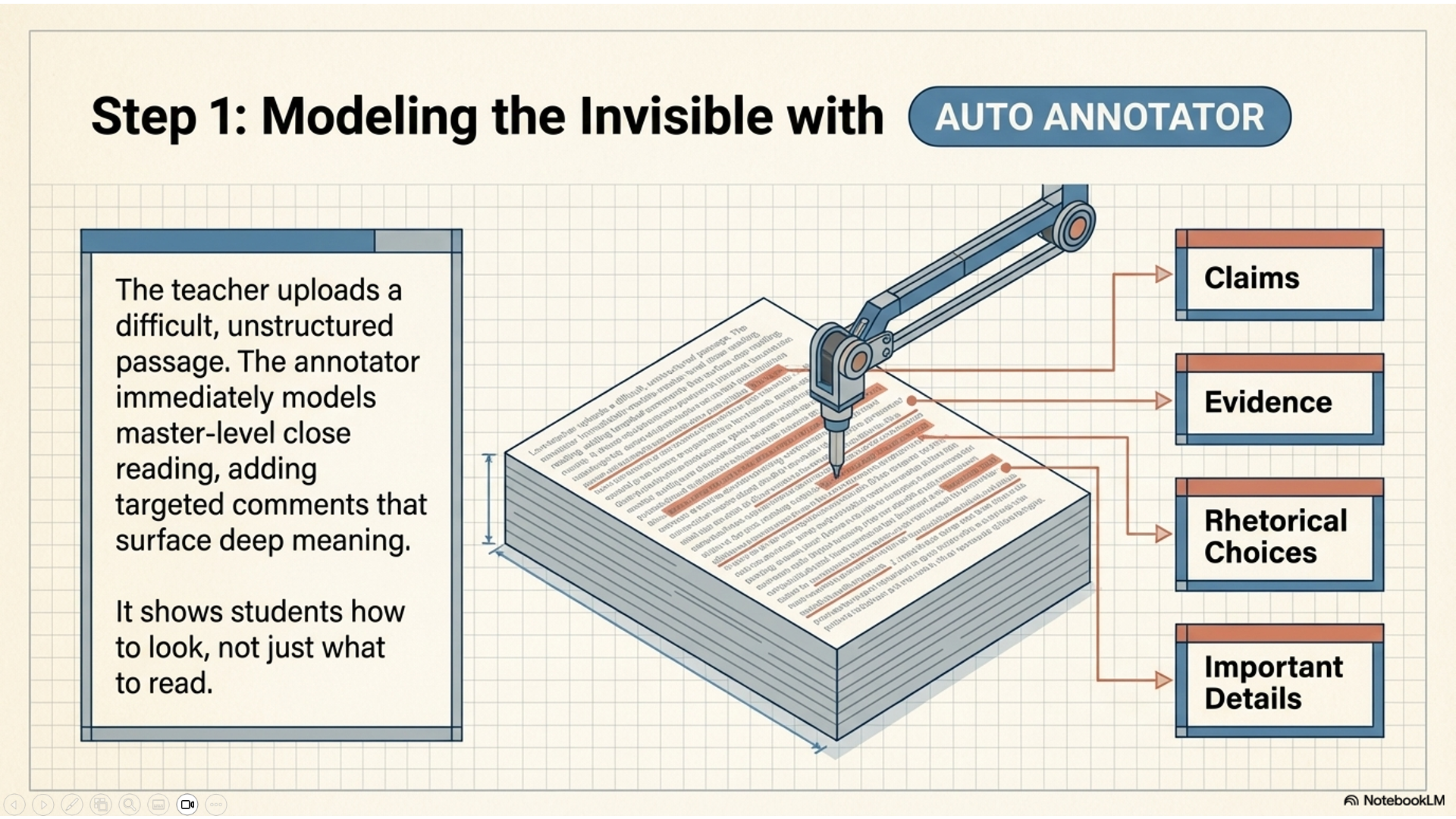
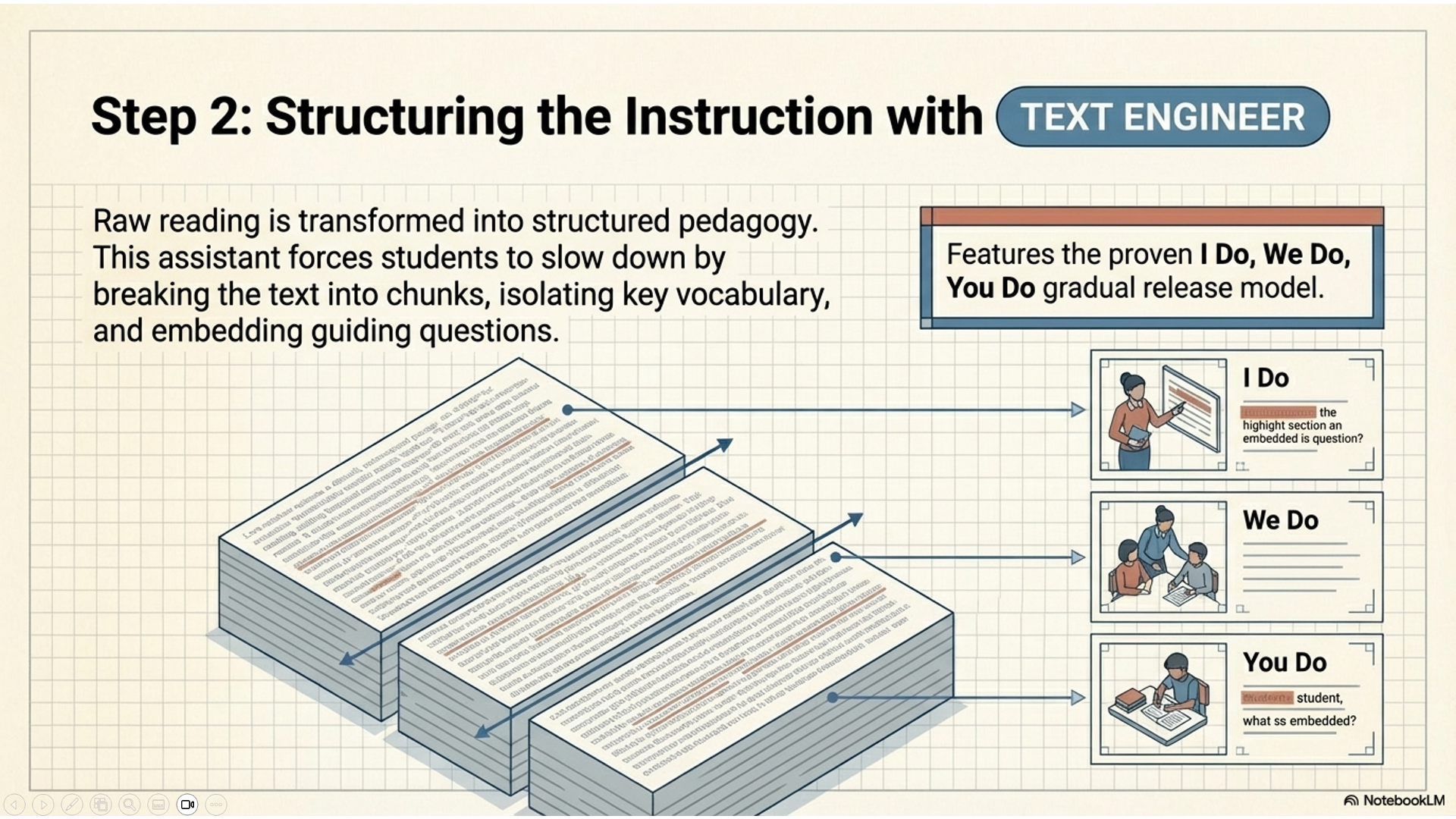
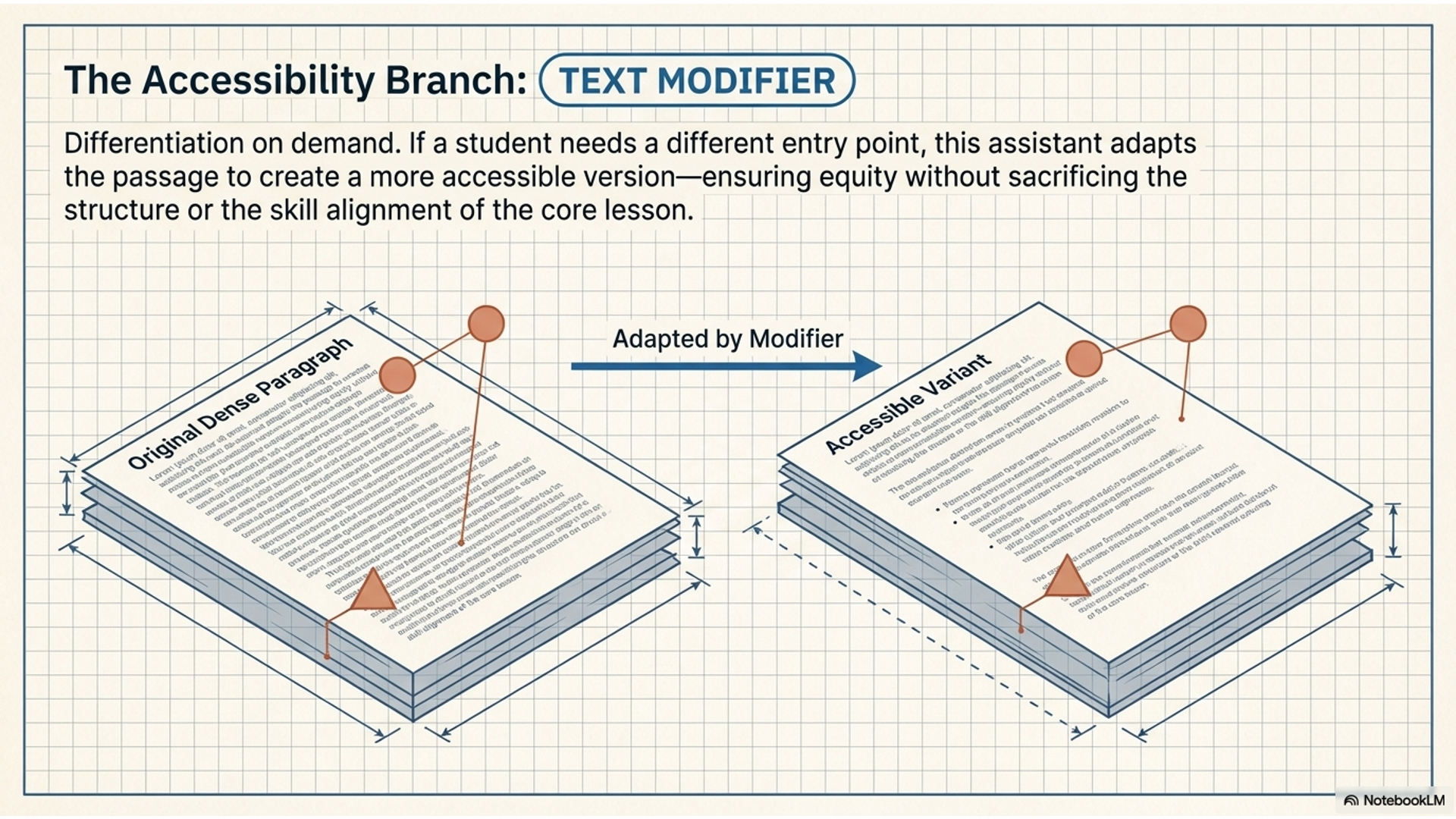
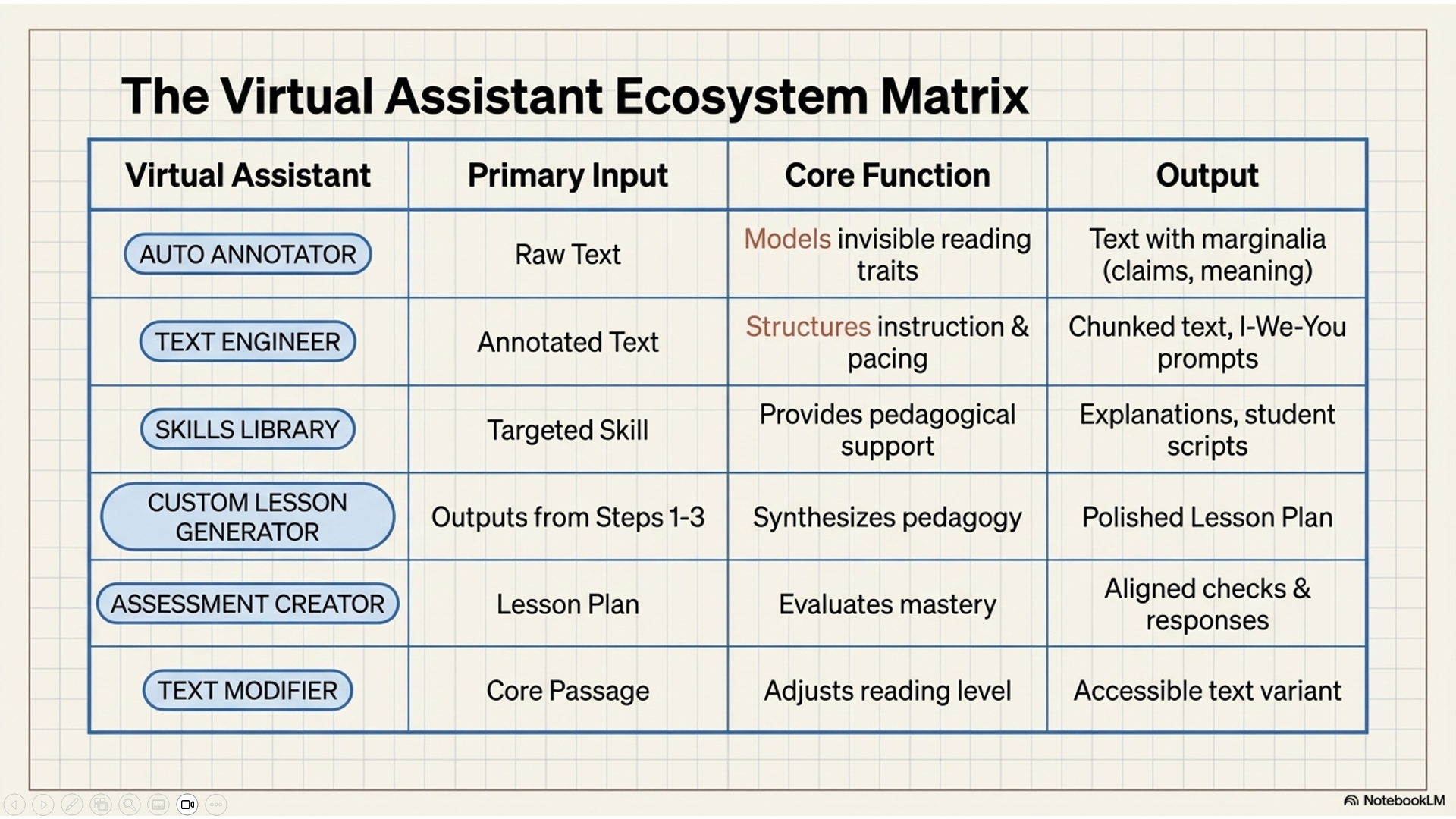
He also realizes the article is a bit dense, so he runs it through the Text Modifier to create a more accessible version for some students, and uses the Auto Annotator to add notes that point out key claims and evidence directly in the text. The Text Engineer helps him chunk the reading and attach guiding questions to each section.
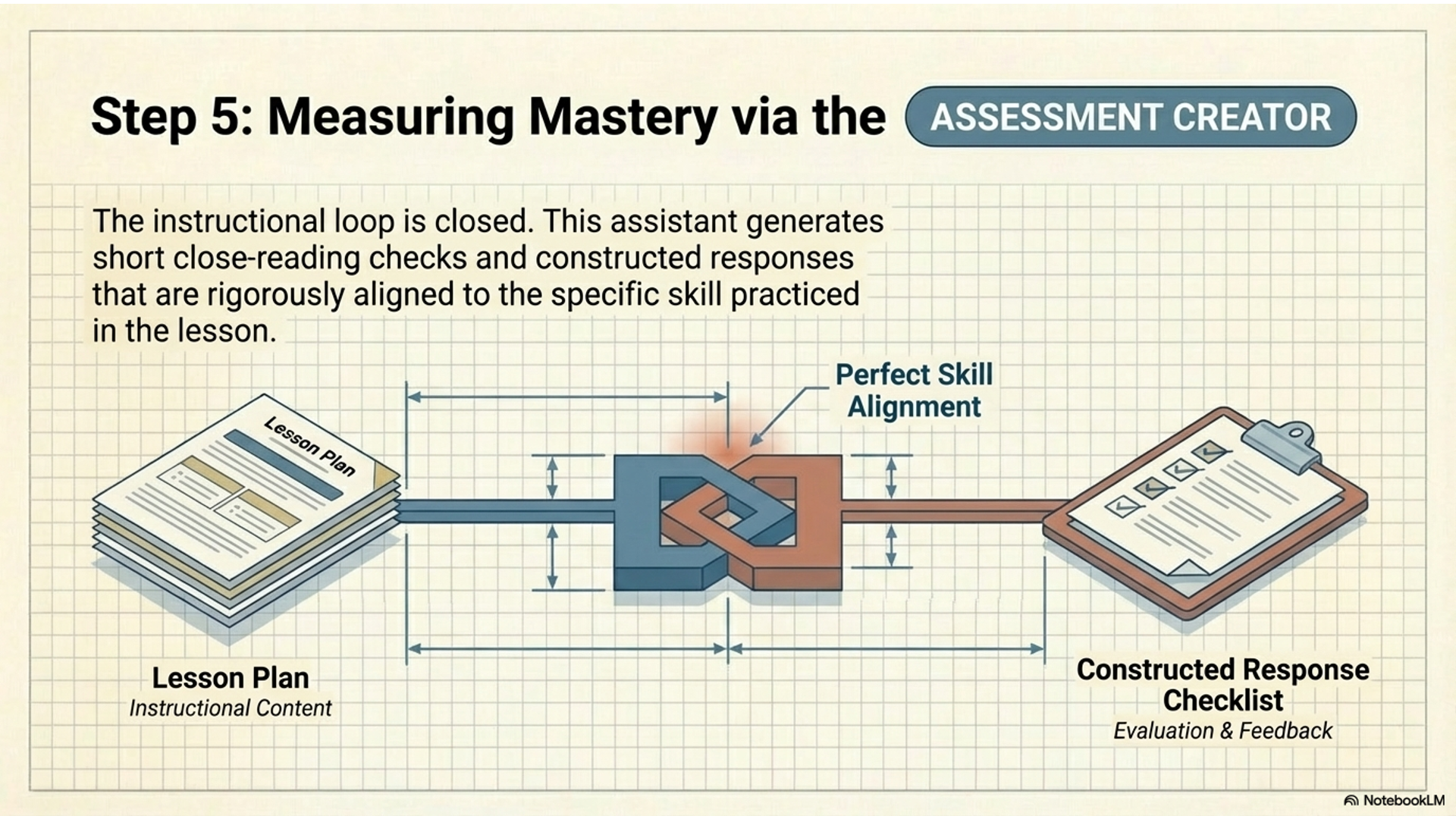
At the end, he uses the Assessment Creator to build a short written response and rubric aligned specifically to the skill of evaluating evidence—not just general comprehension.
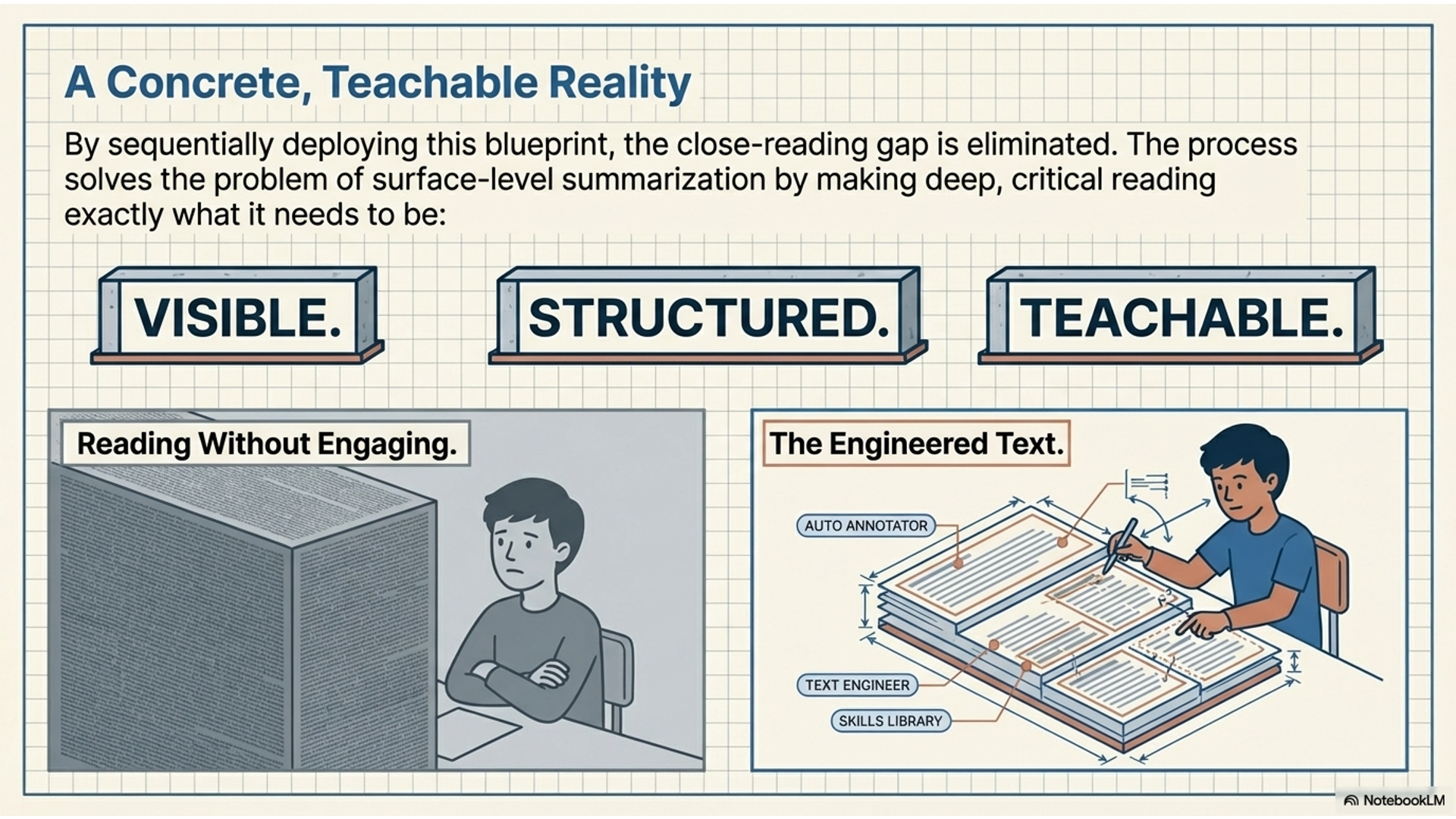
The next day, the lesson feels different. Students aren’t just answering questions—they’re naming the skill, practicing it, explaining it, and applying it. Mr. Chen didn’t change his content—he changed the clarity and structure behind it.
Overview Video
Infographic
Demo Video
Slideshow