Workflow 4: “My Students Struggle To Read”
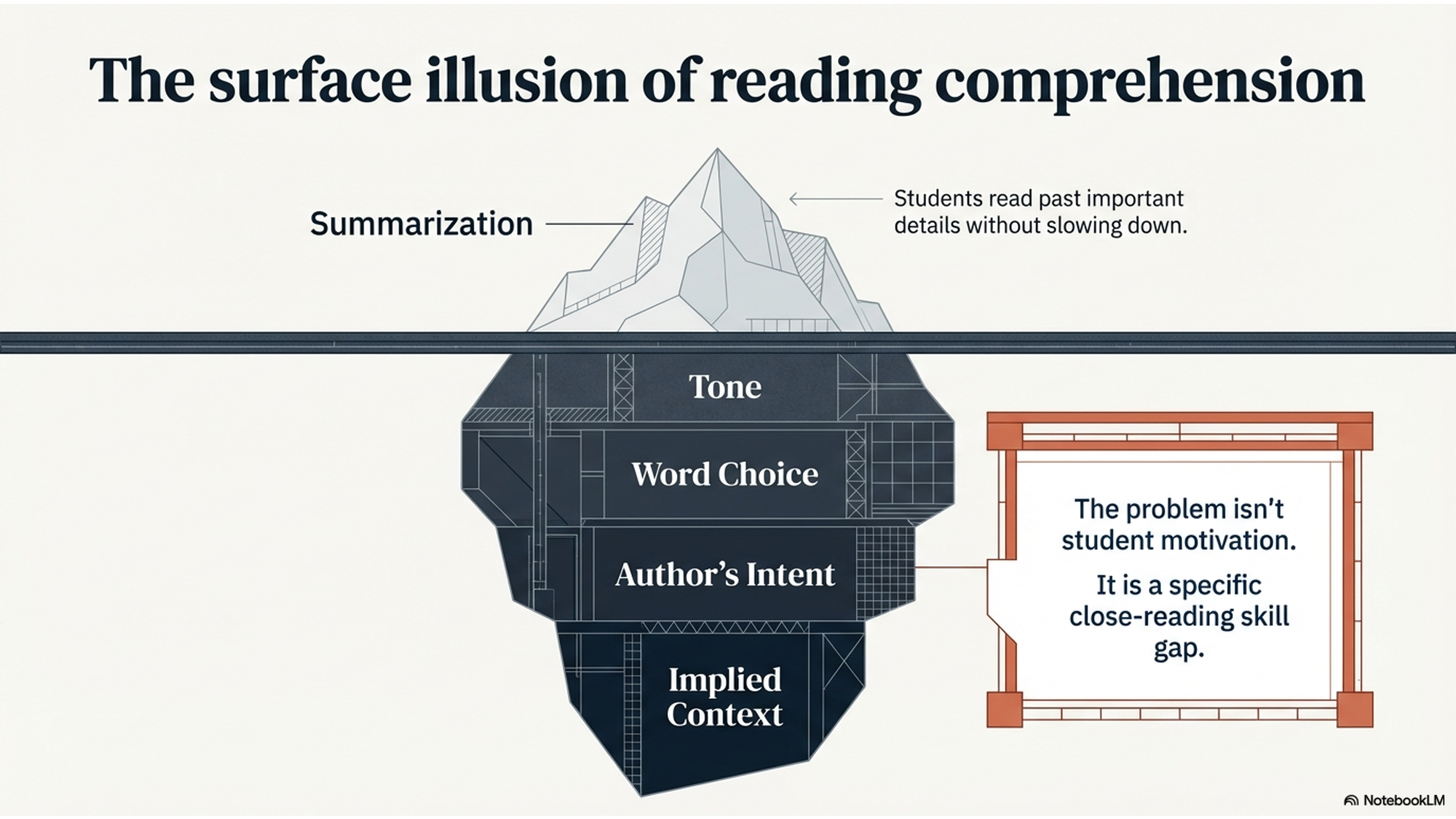
An English teacher notices that her students keep reading past important details without slowing down. They can summarize, but they miss tone, word choice, and what the author is really doing. She realizes the problem isn’t just motivation—it’s a close-reading skill gap.

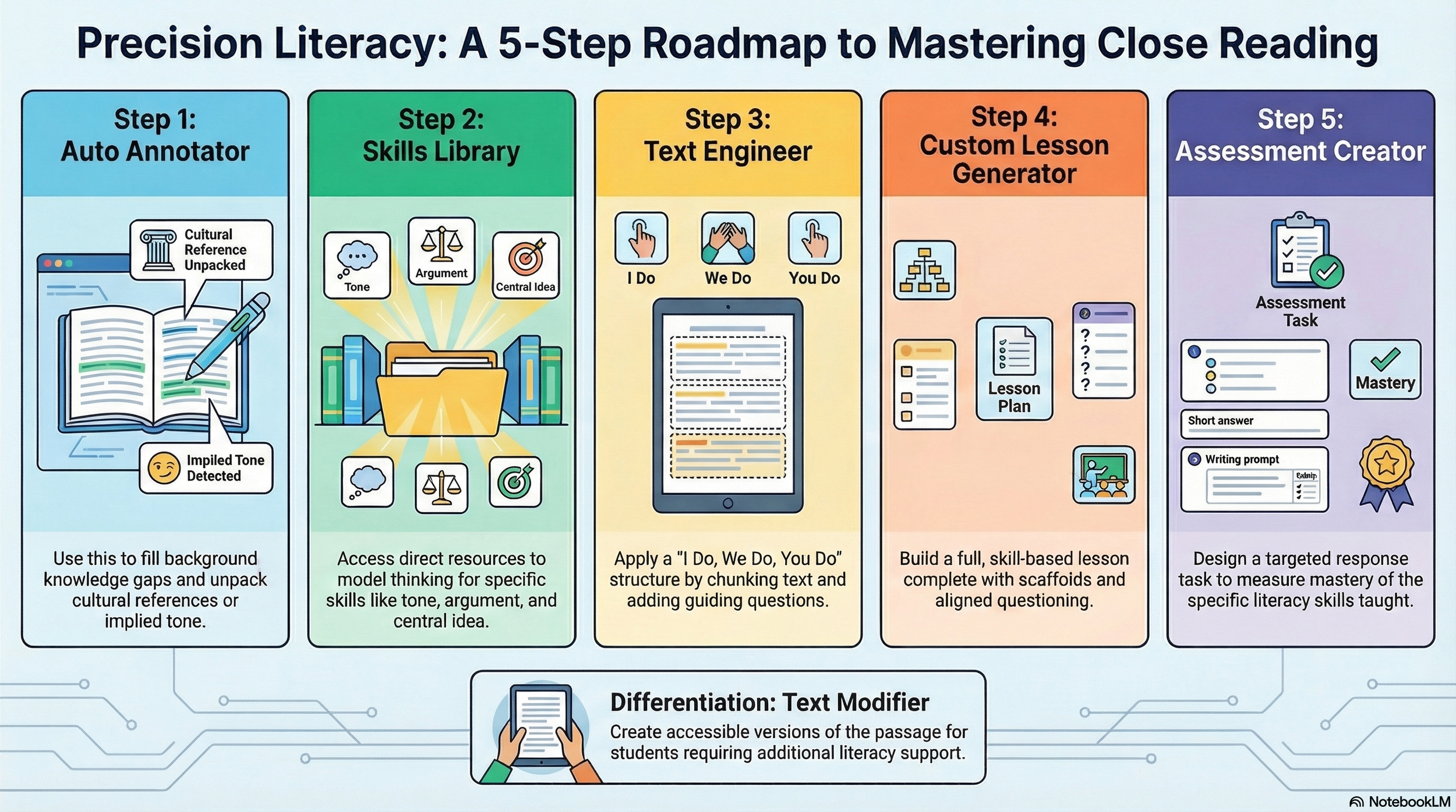
She considers using the Text Engineer, which reliably provides the most essential scaffolds for any text—chunking it into sections, adding guiding questions, identifying key vocabulary, and building a clear “I Do, We Do, You Do” structure. It’s a consistent, go-to tool when students need structure and a step-by-step process for reading.
But in this case, many of her students are multilingual learners, and they struggle not just with structure, but with background knowledge—especially allusions, cultural references, and implied context in the text.
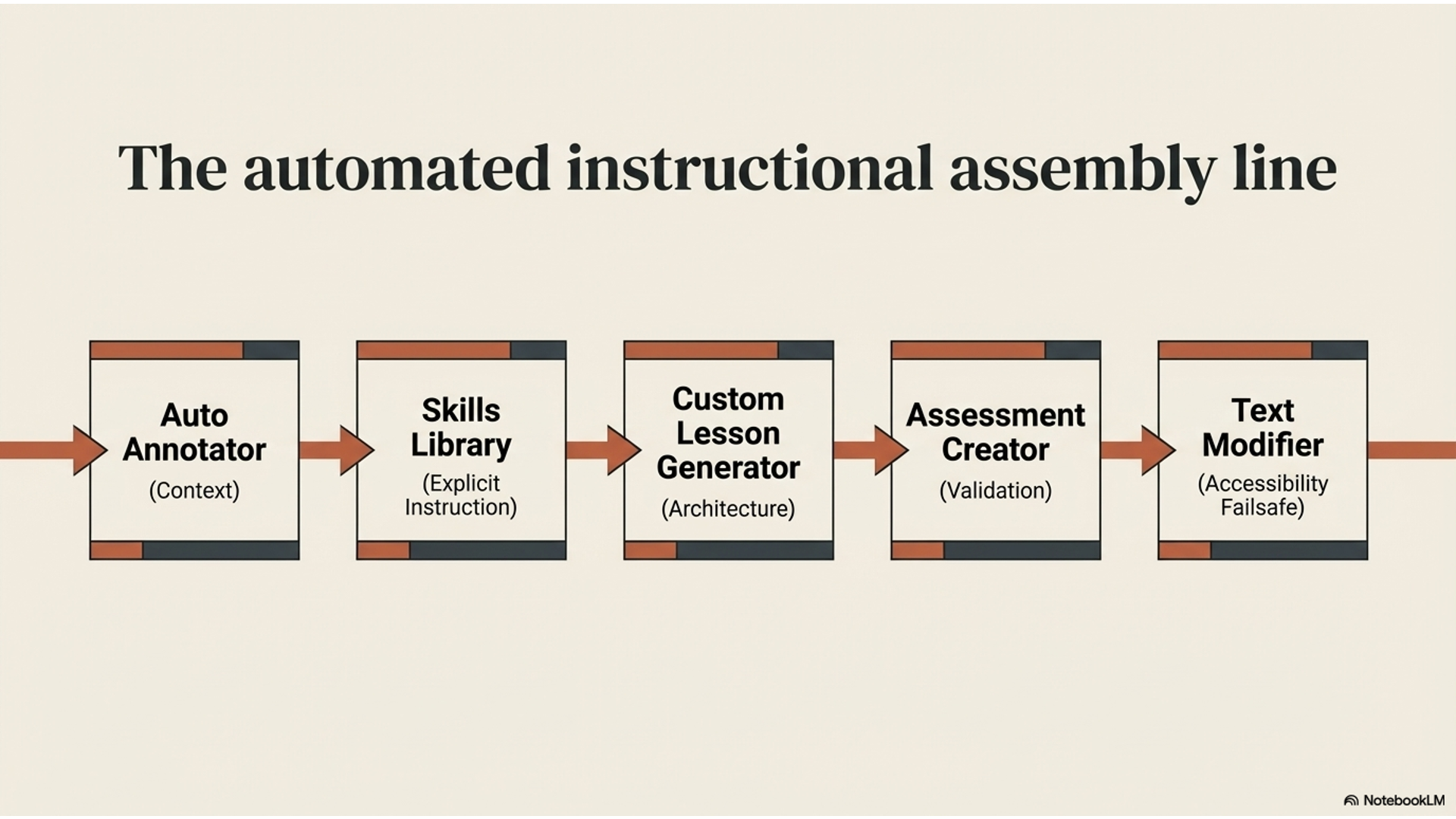
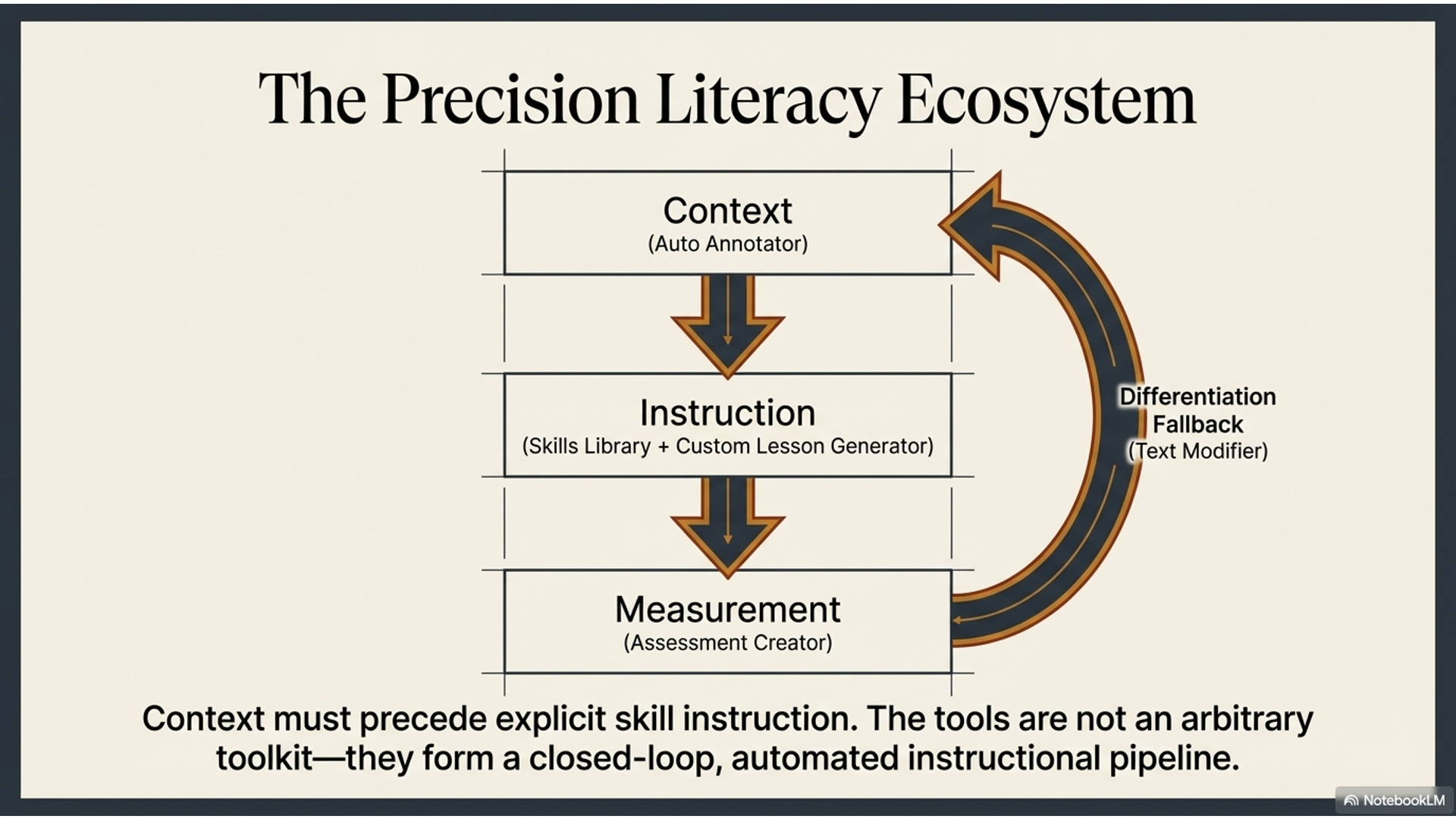
So she starts with the Auto Annotator instead, uploading a passage students found difficult. She uses it to add deeper, more contextual annotations—explaining references, unpacking tone, and pointing out what the author is doing and why it matters. The annotations don’t just guide reading—they fill in the gaps her students don’t yet have.
She then connects this work to the Skills Library, where she finds direct support for teaching tone, argument, and central idea. She uses the resources to model thinking, and even has students practice explaining the skill using simple, structured language.
Next, she moves to the Custom Lesson Generator, which identifies the underlying literacy skills in the text and builds a full, skill-based lesson around them—complete with modeling, scaffolds, and aligned questioning. She follows this with the Assessment Creator to design a short close-reading response that directly measures those same skills.
If some students still need additional support, she uses the Text Modifier to create a more accessible version of the passage.
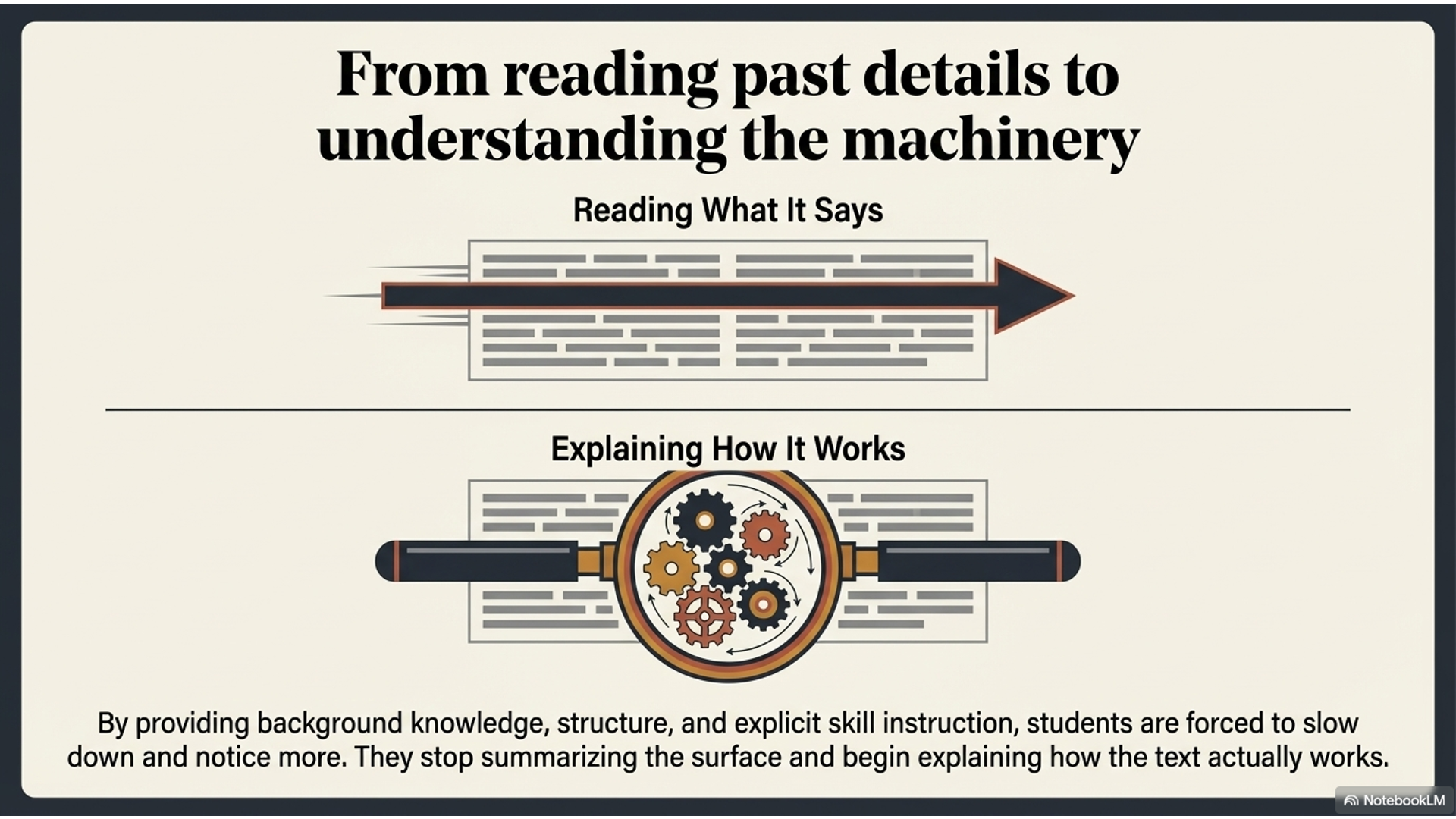
By the end, she’s not just asking students to “read more carefully”—she’s given them the background knowledge, structure, and explicit skill instruction they need to actually do it. The result is that students slow down, notice more, and begin to explain not just what the text says, but how it works.
Overview Video
Infographic
Demo Video
Slideshow