Workflow 7: I have students that are three or more grade levels below the skills needed for the current grade
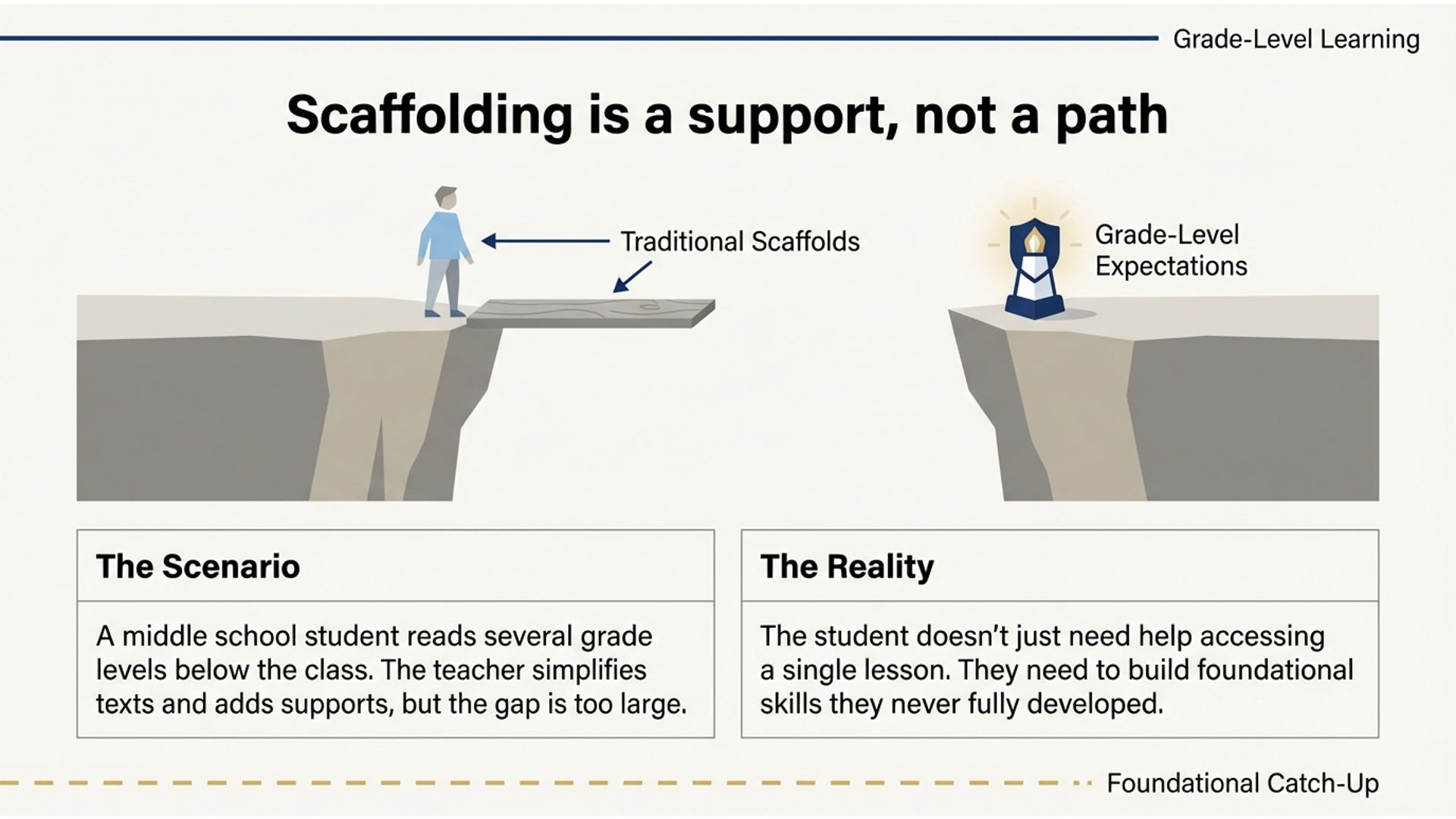
Ms. Jackson, a middle school teacher, has a student reading several grade levels below the rest of the class. At first, she tries to scaffold the lesson—simplifying texts, adding supports—but quickly realizes that’s not enough. The gap is too large. The student doesn’t just need help accessing this lesson—they need to build foundational skills they never fully developed.

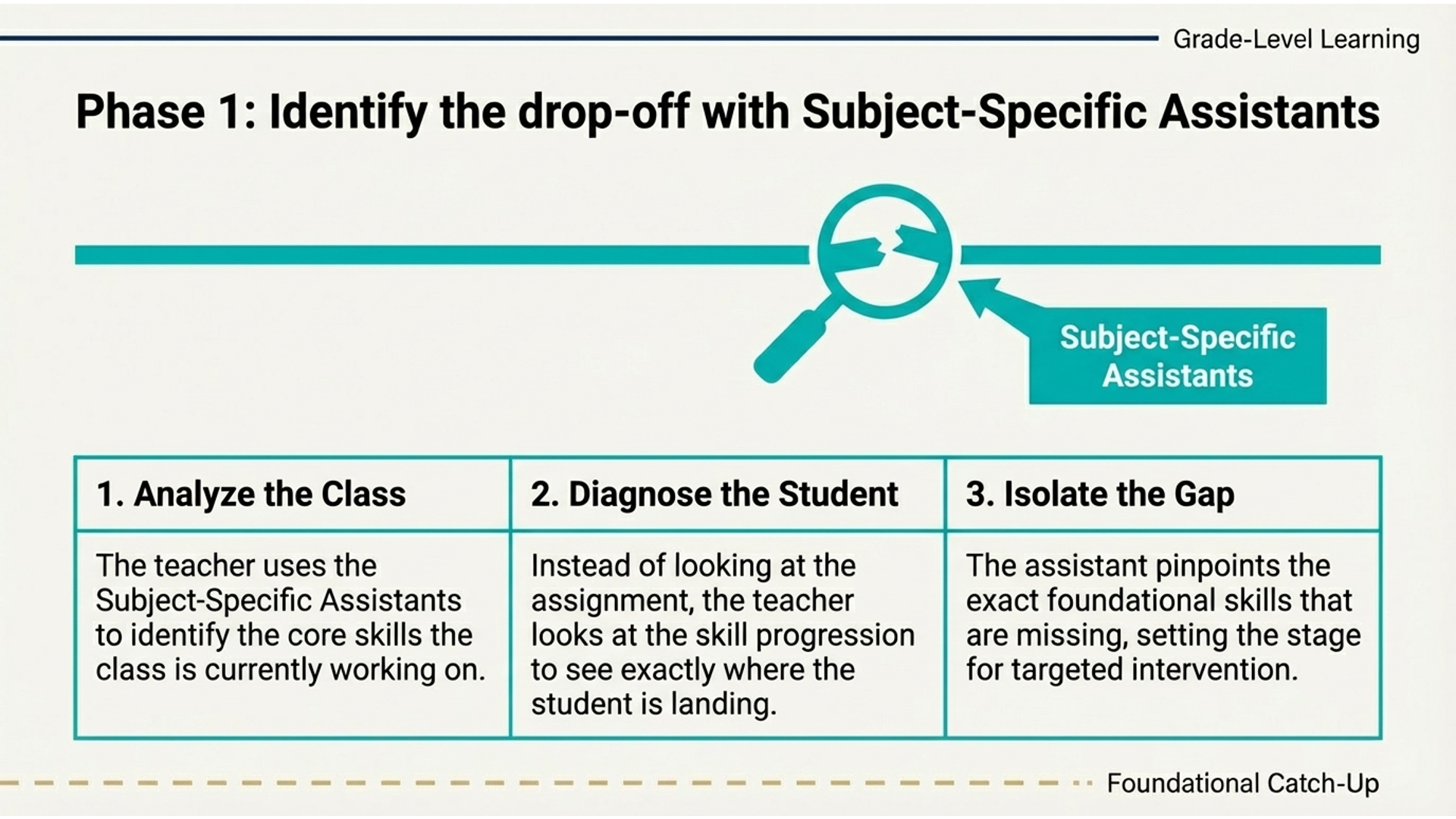
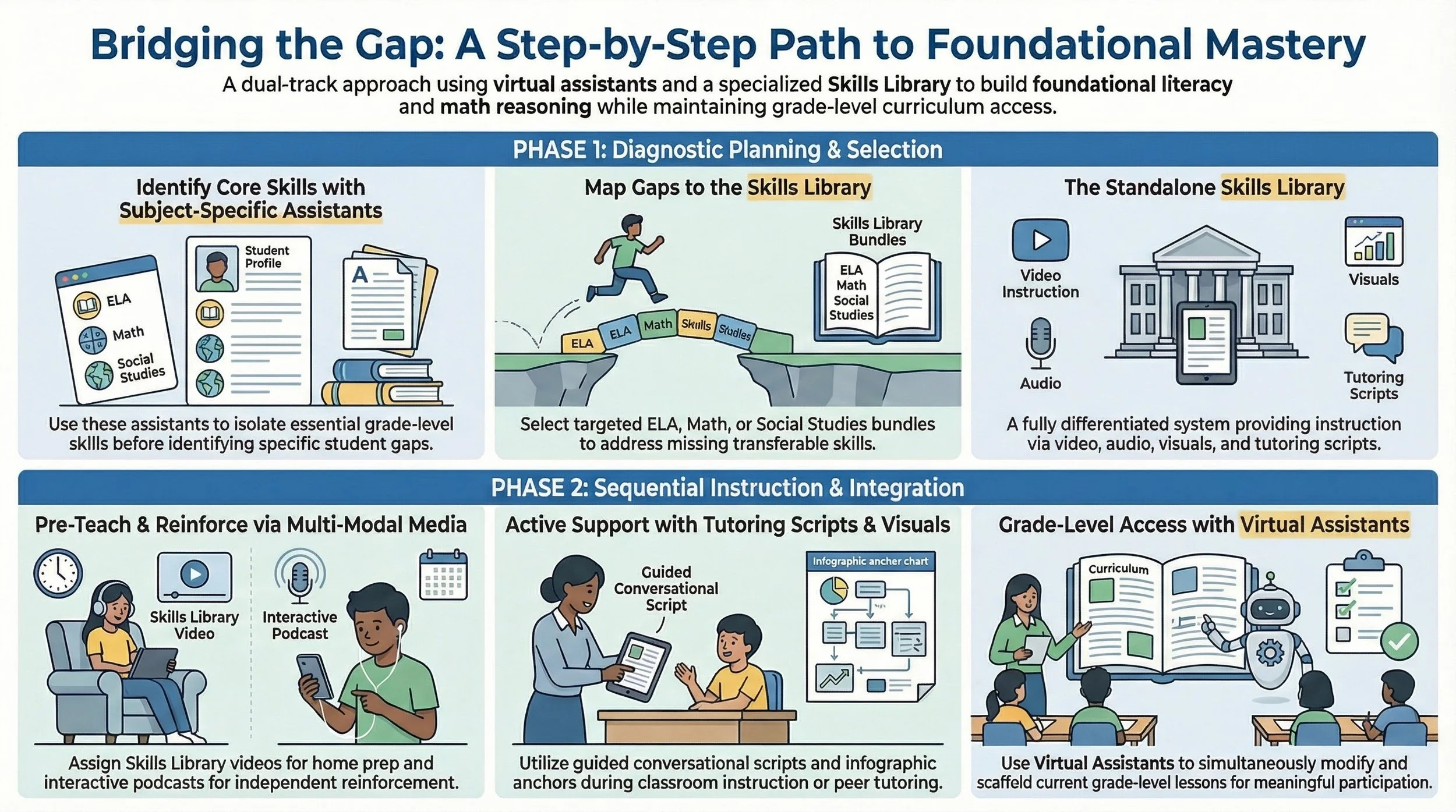
She starts by using the Subject-Specific Assistants to identify the core skills her class is working on. But at the same time, she begins thinking more diagnostically: Where is this student actually landing within those skills?
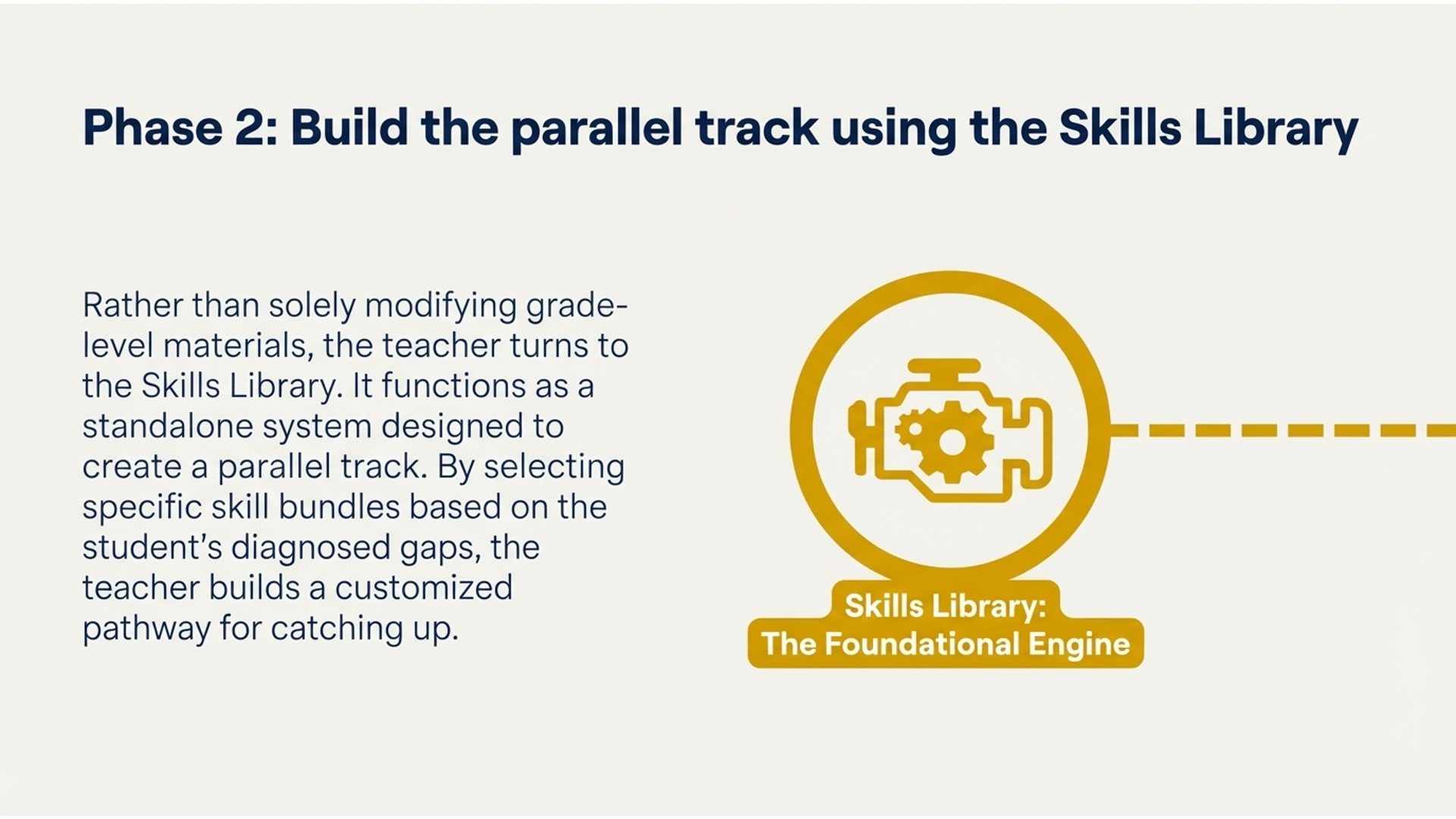
Instead of only modifying grade-level materials, she turns to the Skills Library as a standalone system—focusing on the most essential, transferable areas:
ELA reading, writing, and speaking skills
Math reasoning and explanation skills
Social studies nonfiction reading and writing skills, which help build vocabulary and background knowledge
She selects skill bundles from these areas based on what the student is missing, creating a parallel track for catching up.
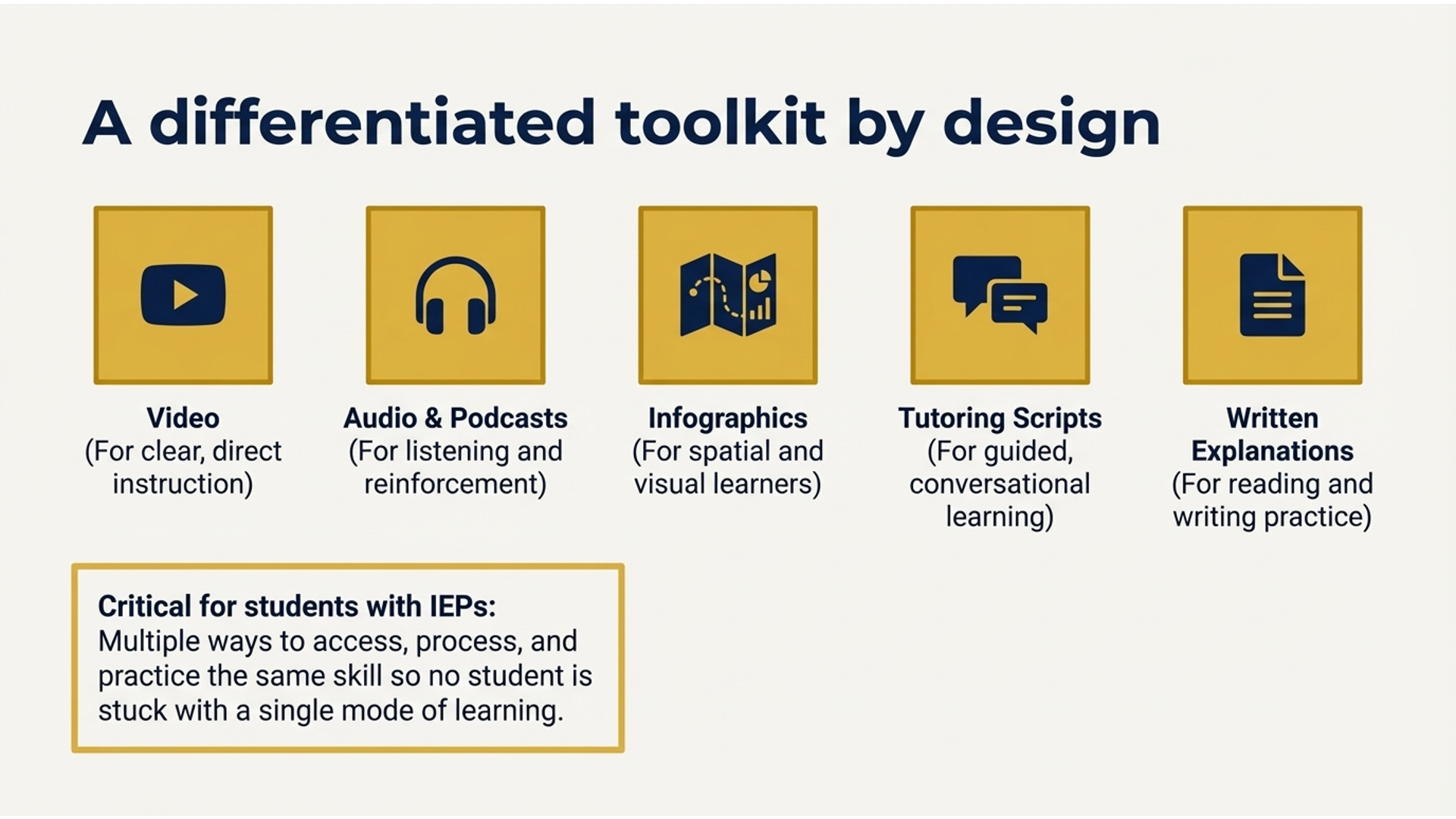
What makes this especially powerful is that the Skills Library is already fully differentiated by design, which is critical for students with IEPs. Each skill is supported in multiple formats:
Video for clear, direct instruction
Audio/podcasts for listening and reinforcement
Infographics and visuals for spatial and visual learners
Tutoring scripts for guided, conversational learning
Written explanations and literacy supports for reading and writing practice
There are multiple ways to access the same skill, multiple ways to process it, and multiple ways to practice it—so the student isn’t stuck with just one mode of learning.
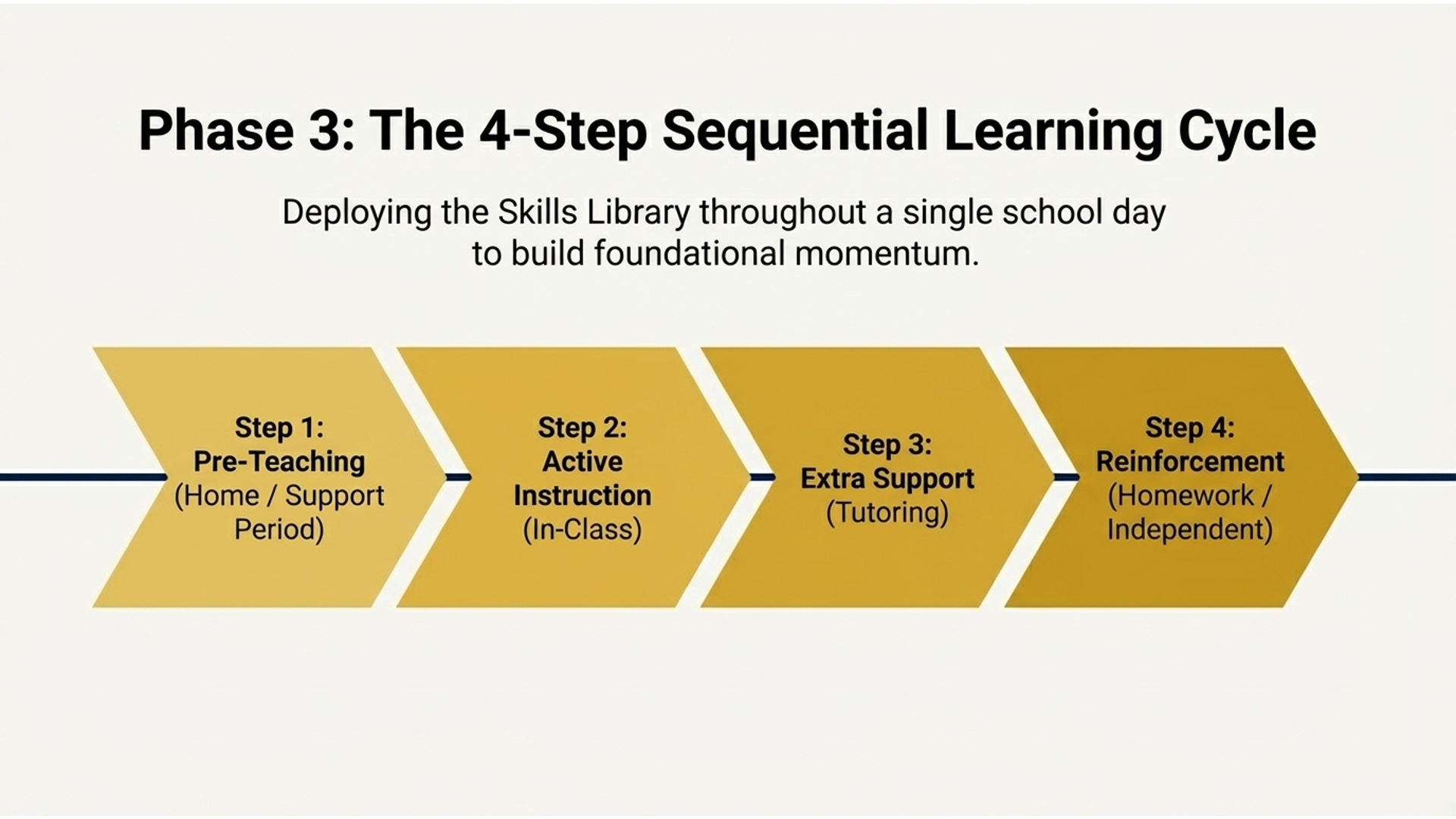
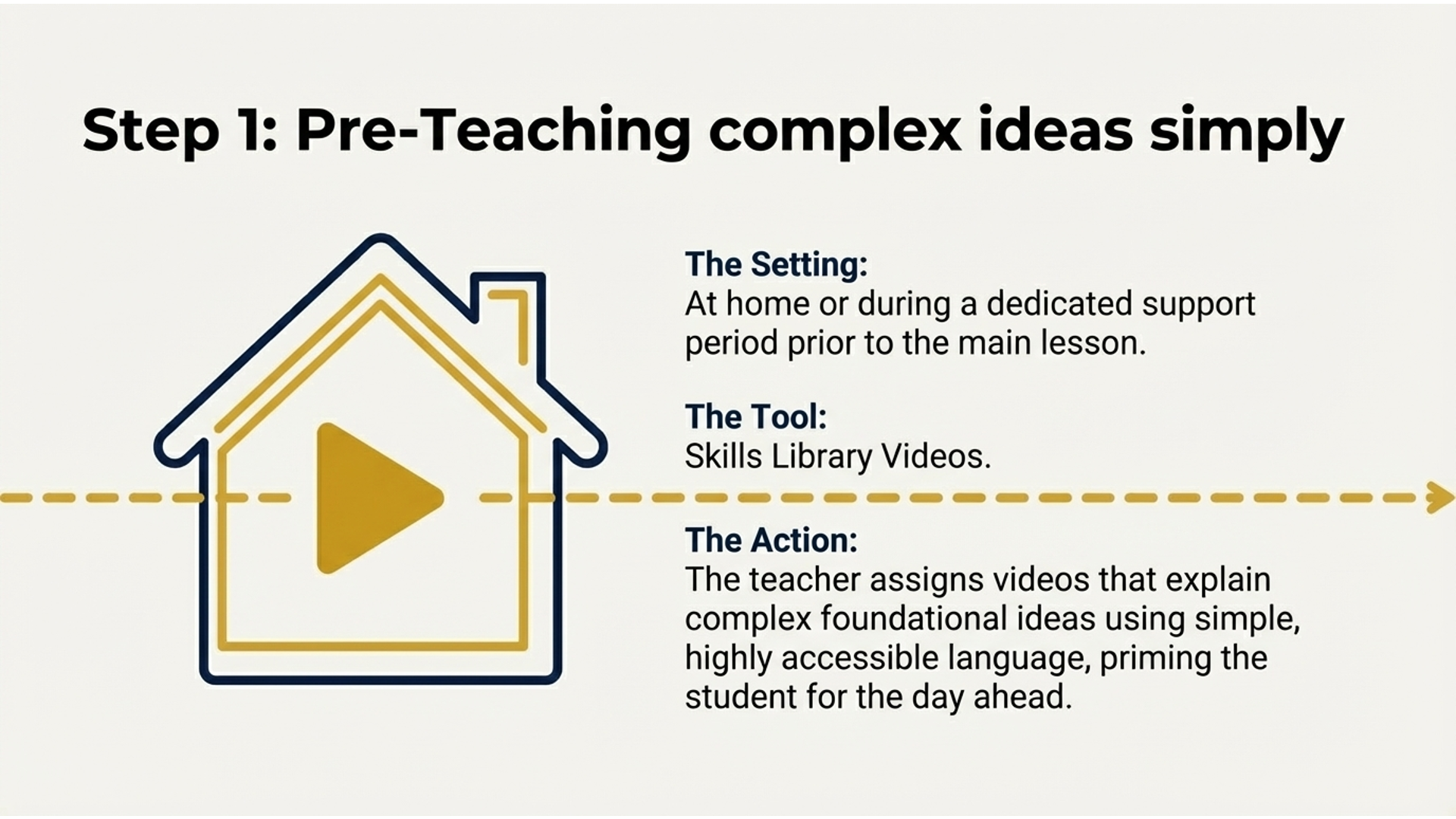
Pre-teaching (at home or support period):
She assigns Skills Library videos, which explain even complex ideas in simple, accessible language.
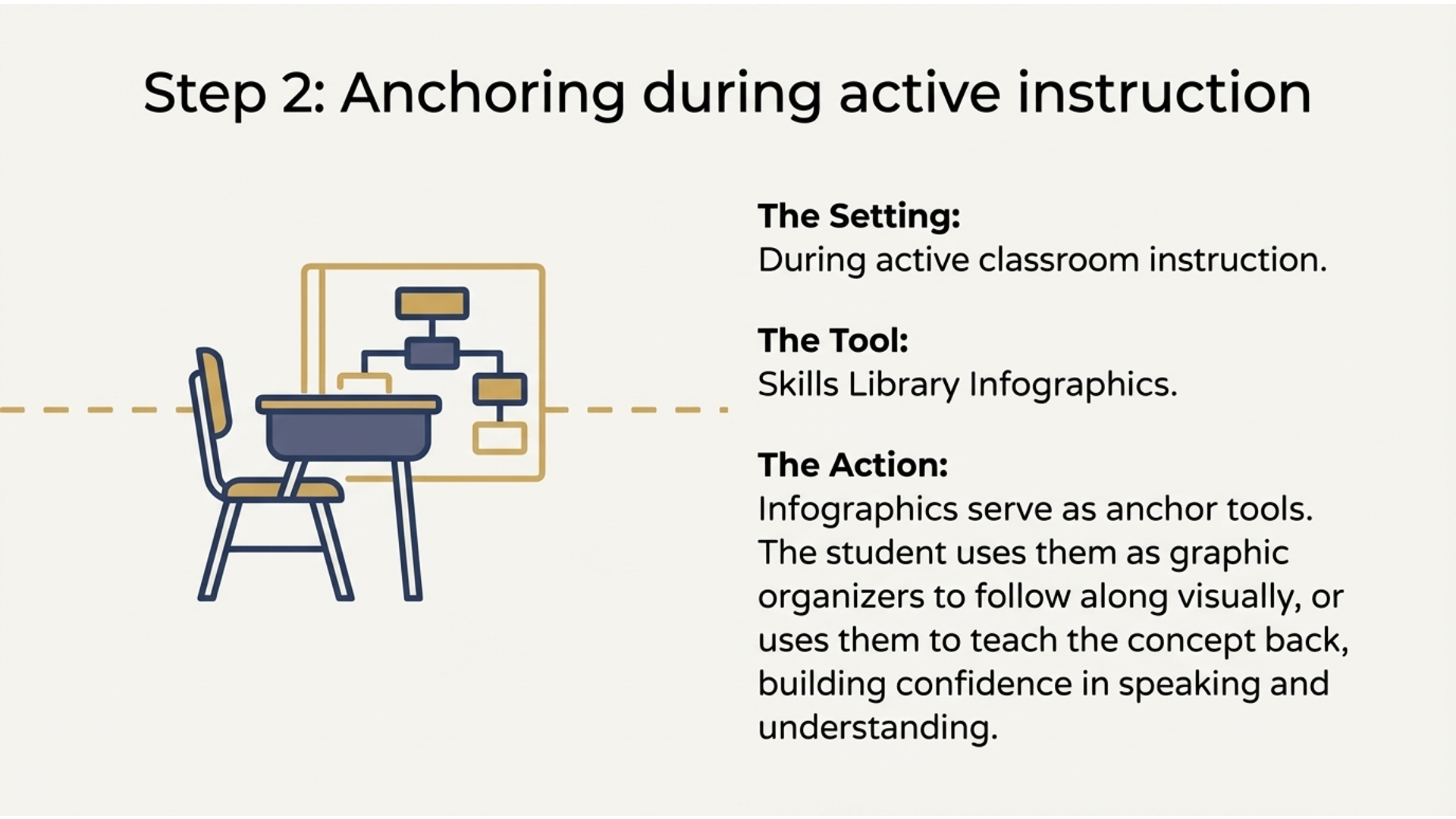
During instruction:
She uses infographics as anchor tools. The student can use them as a graphic organizer, follow along visually, or even teach the concept back—building confidence in speaking and understanding.
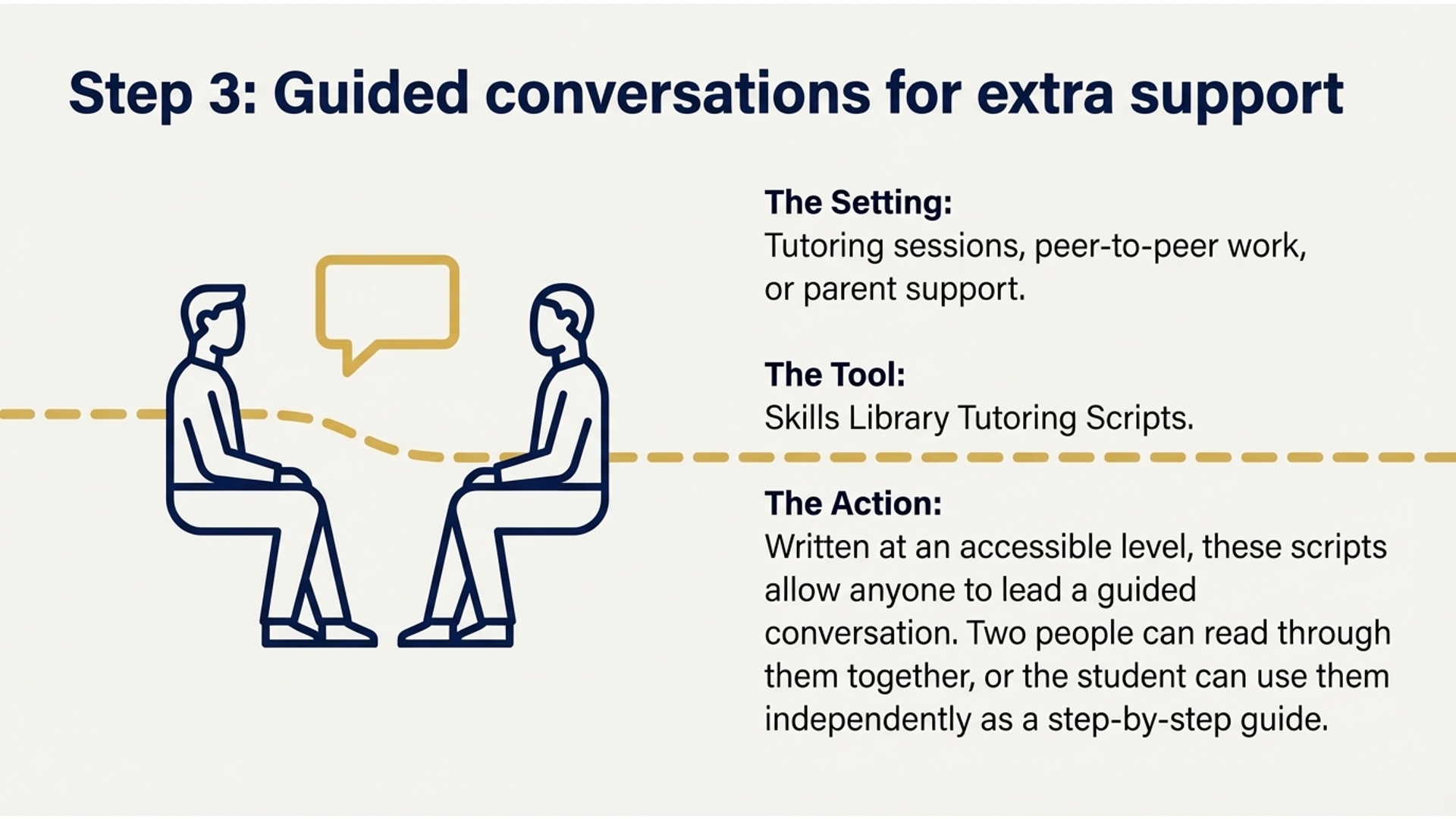
Extra support / tutoring:
She uses the tutoring scripts, which are written at a very accessible level and can be used by peer tutors, parents, or anyone new to teaching. Two people can read through them together like a guided conversation, making learning more engaging and supportive. And if needed, the student can use them independently as a step-by-step guide.
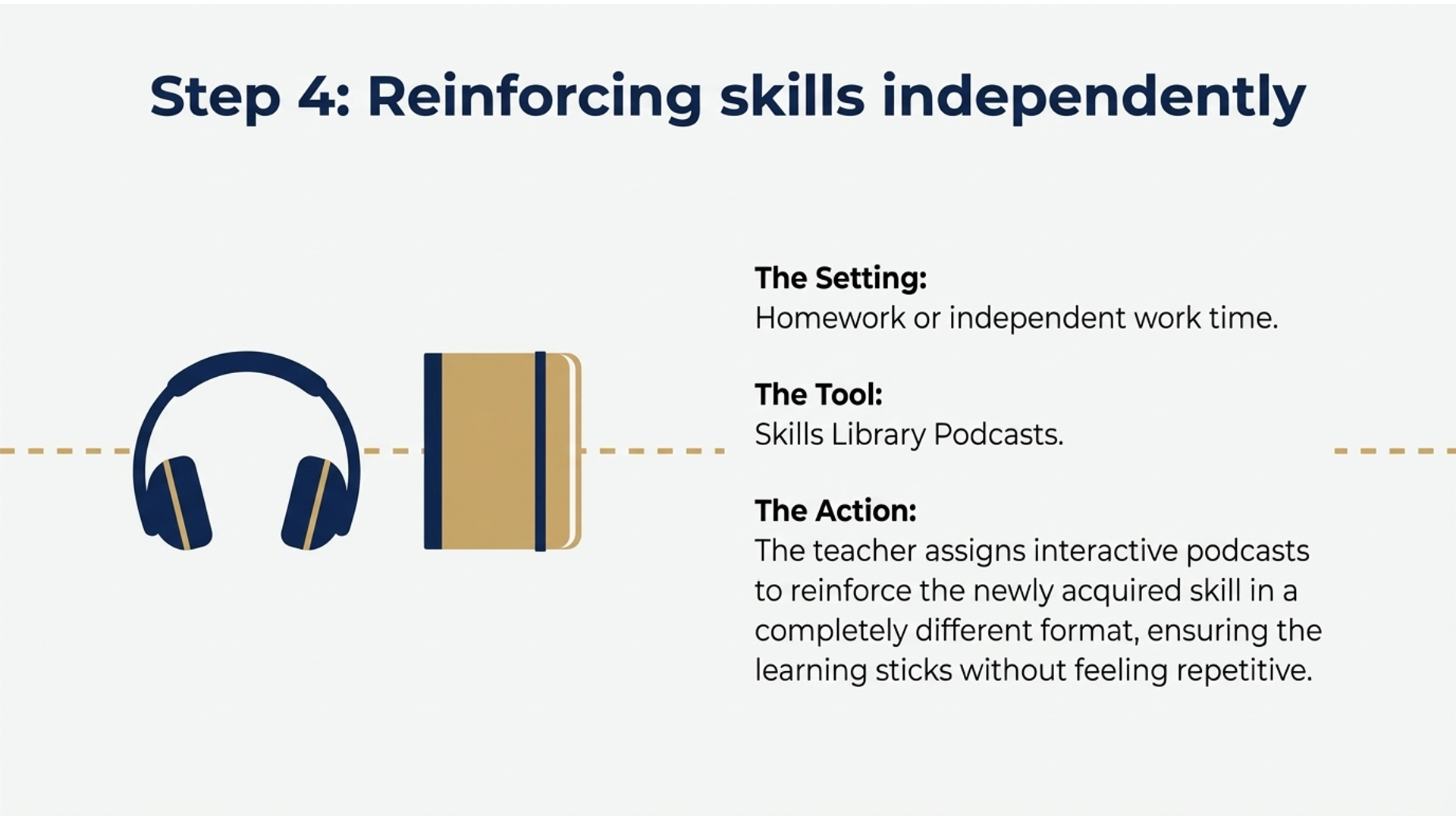
Reinforcement (homework or independent work):
She assigns podcasts—especially interactive ones—to reinforce the skill in a different format.
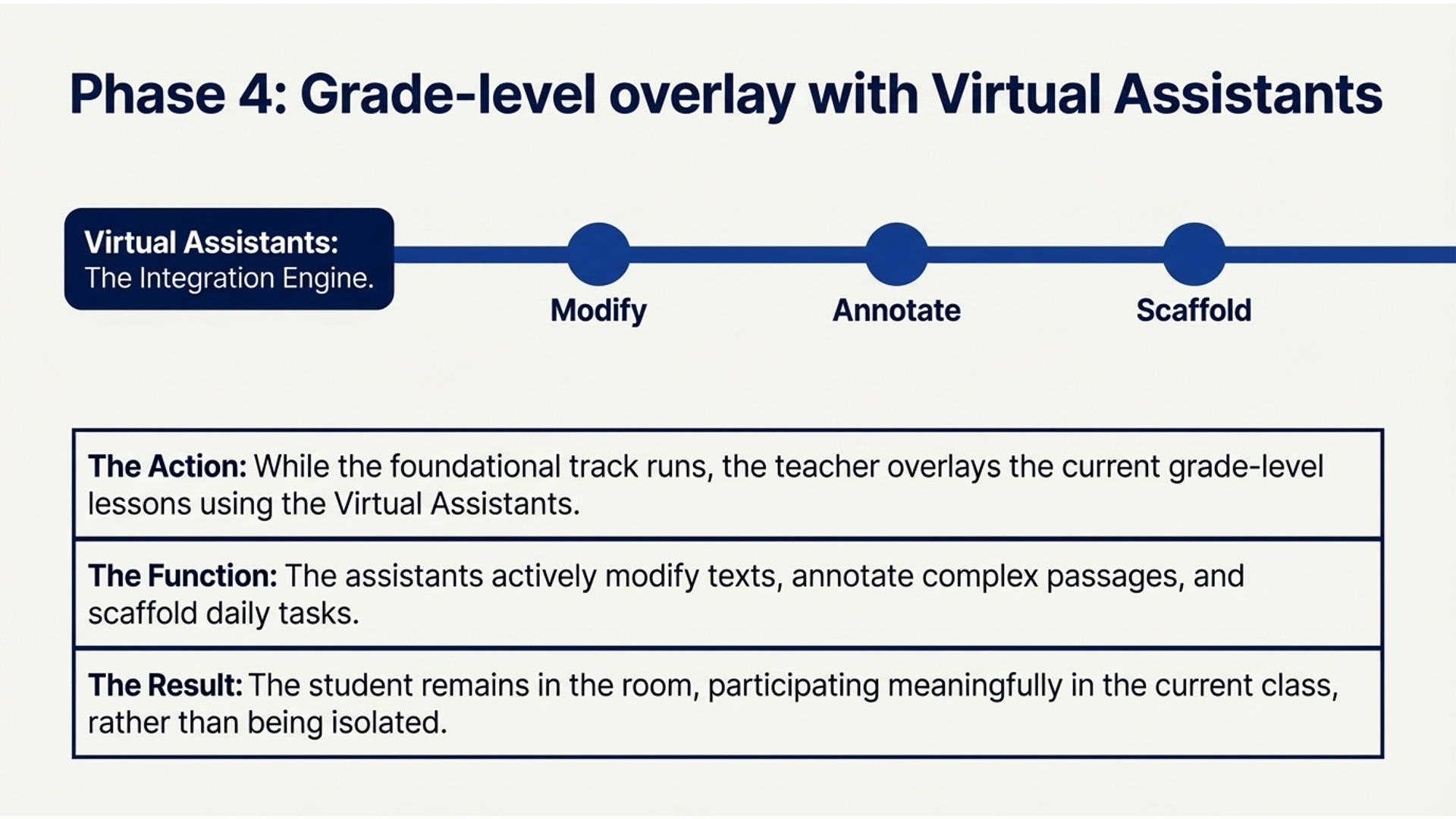
At the same time, she continues to overlay her grade-level lessons using the Virtual Assistants—modifying texts, annotating, and scaffolding tasks—so the student can still participate meaningfully in class.
Over time, the student is no longer just “getting by” with supports. They are actively building the core literacy, communication, and reasoning skills that unlock all subjects.
This approach solves a deeper problem: not just access to one lesson, but access to the entire academic foundation. The Skills Library becomes the engine for catching students up—while the rest of the system keeps them connected to grade-level learning.
Overview Video
Infographic
Demo Video
Driven by passion, grounded by values. We're a team of passionate thinkers and doers, dedicated to building with purpose and clarity. Collaboration and curiosity drive everything we do.
Slideshow