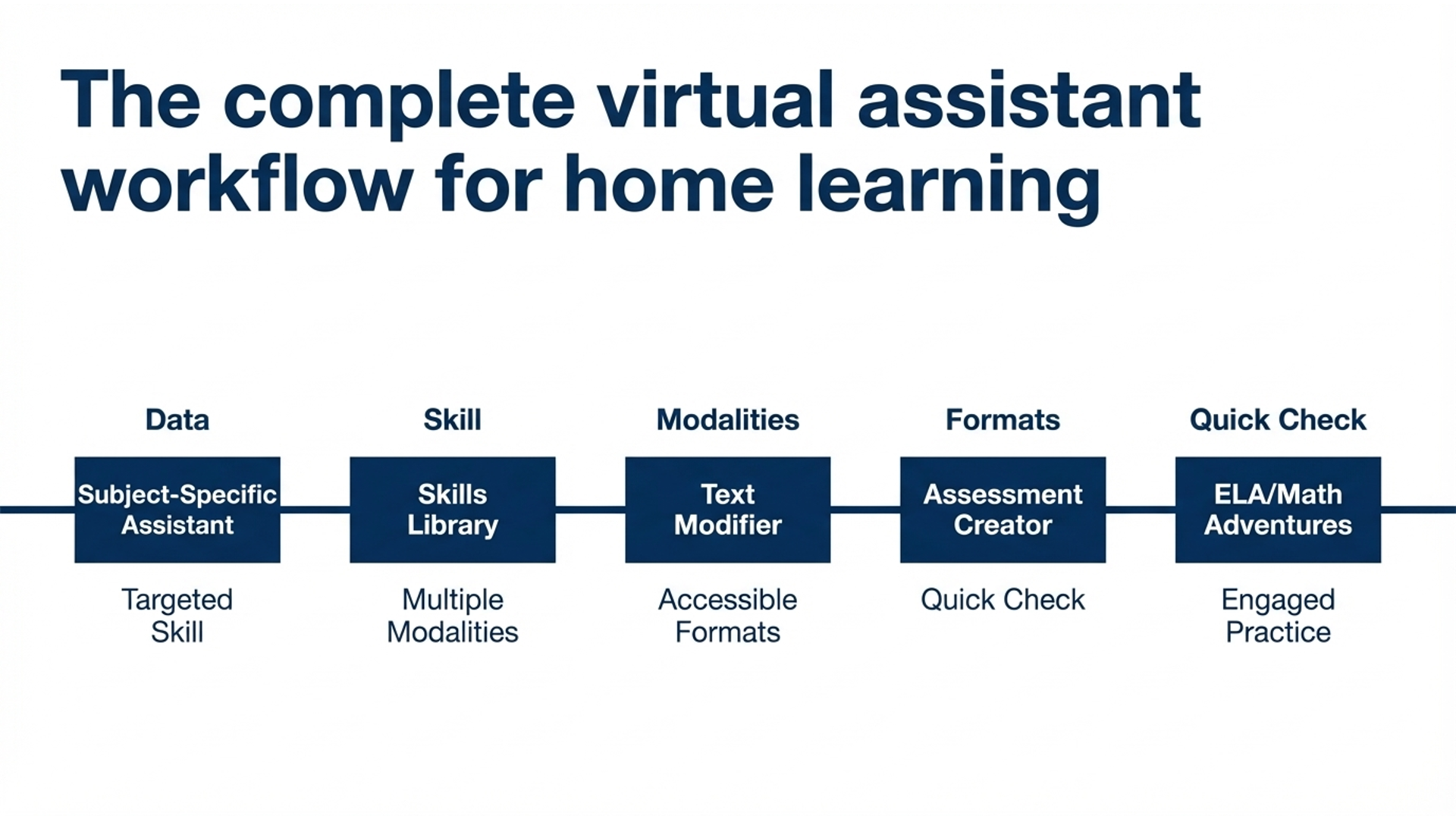
Workflow 8: “I want to send meaningful support home, not just packets”
A teacher knows that some students need more support outside of class, but she doesn’t want to send home random packets that families may not understand or use effectively. She wants students and families to receive something focused, usable, and clearly connected to what the student is actually trying to learn.

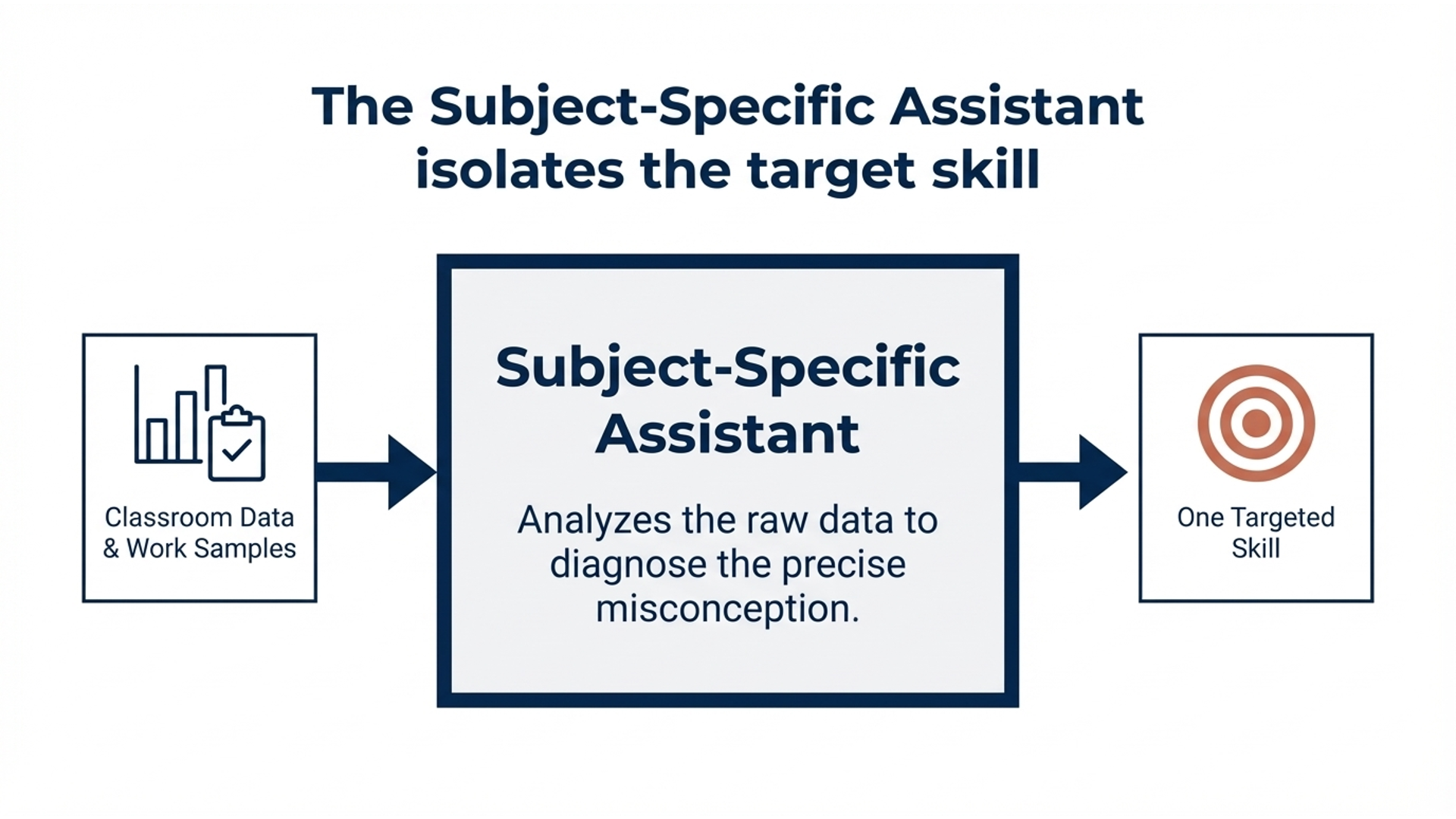
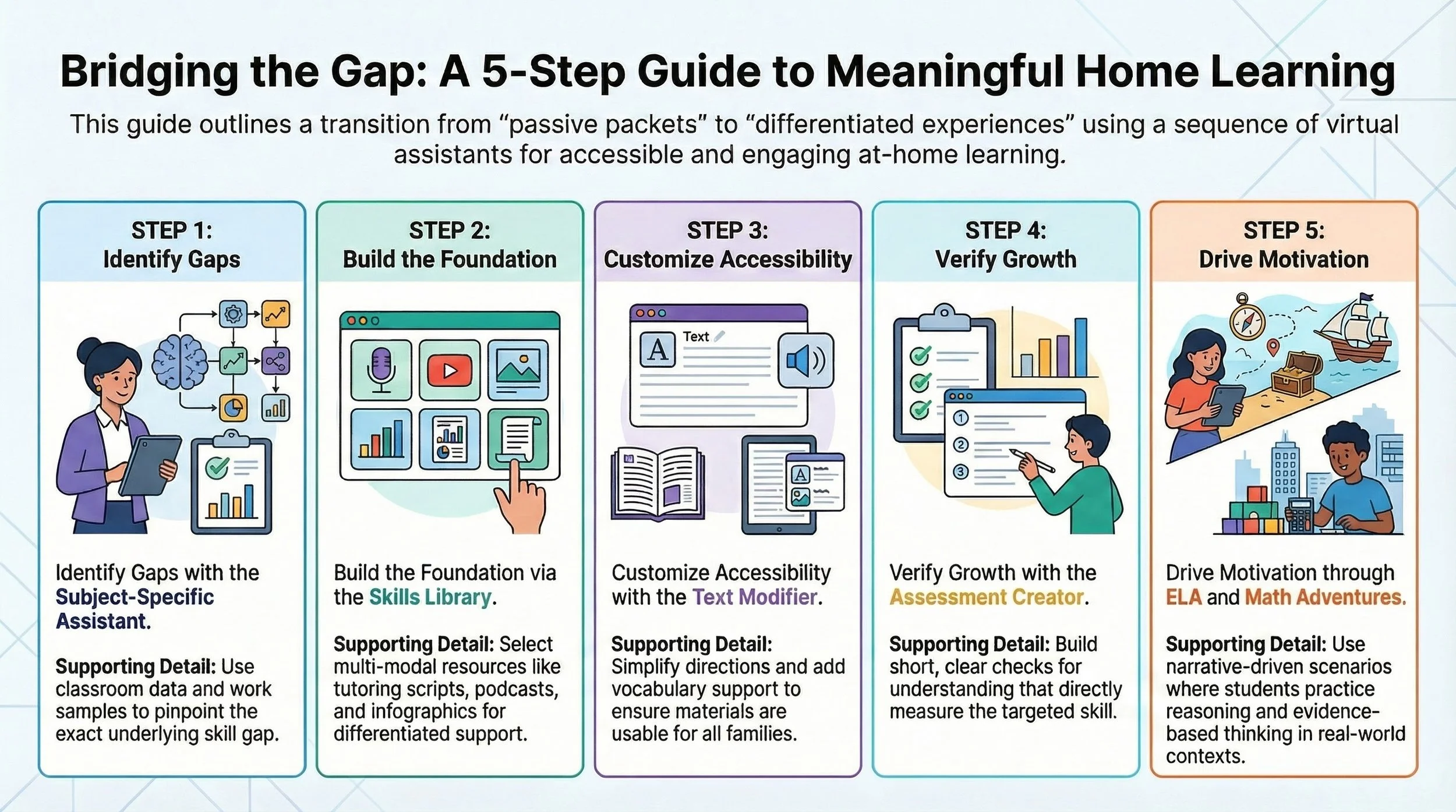
She begins by identifying the exact skill the student needs—using classroom data, work samples, or the Subject-Specific Assistant to pinpoint the underlying gap. Instead of sending general practice, she targets a specific skill the student is ready to work on.
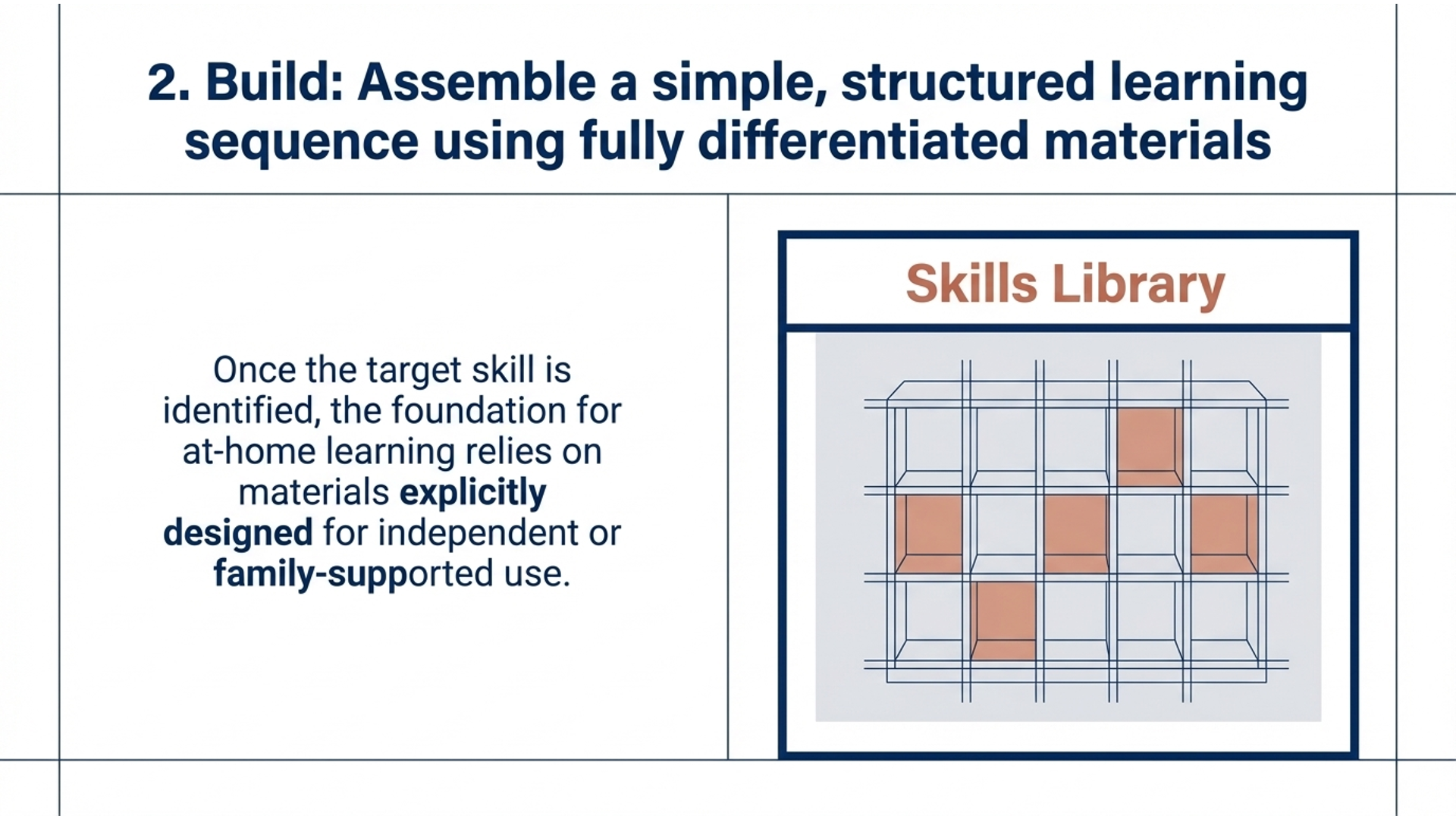
She then turns to the Skills Library, which becomes the foundation for at-home learning. What makes it especially powerful is that it is already fully differentiated and designed for independent or supported use at home. She can pull together a simple, structured learning sequence using multiple formats:
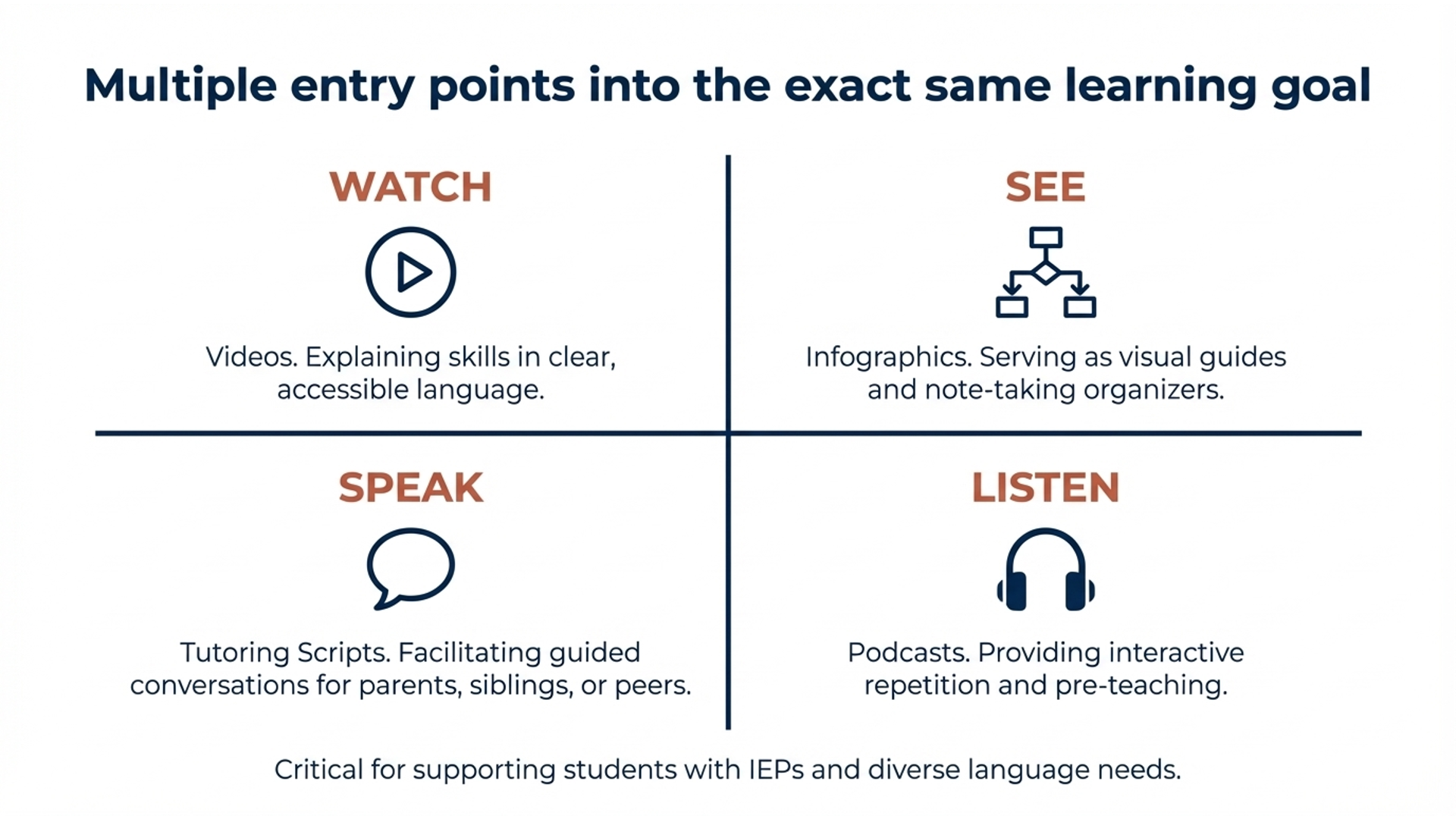
-Videos that explain the skill in clear, accessible language
-Infographics that students can use as visual guides or even as note-taking organizers
-Tutoring scripts that allow a parent, sibling, or peer to sit with the student and work through the skill together like a guided conversation—or for the student to read independently if needed
-Podcasts (including interactive ones) that reinforce the skill through listening, ideal for review, repetition, or pre-teaching
This gives families flexibility—students can watch, listen, read, speak, or interact with the skill depending on how they learn best. It’s not one format—it’s multiple entry points into the same learning goal, which is especially important for students with IEPs or language needs.
To make the materials even more accessible, she can use the Text Modifier to simplify directions, create guided notes, or add vocabulary support for home use. She then uses the Assessment Creator to build a short, clear check for understanding—something manageable that directly measures the same skill.
To increase motivation and engagement, she also incorporates the ELA Adventures and Math Adventures:
In ELA Adventures, students can create and write their own stories while practicing skills like inference, tone, or evidence-based thinking within a narrative.
In Math Adventures, students solve problems in real-world scenarios where their math decisions affect outcomes, helping them practice reasoning, modeling, and application in a meaningful context.
Both of these are not just engaging—they are skill-aligned and assessable, meaning the teacher can still evaluate student thinking and progress based on what they produce.
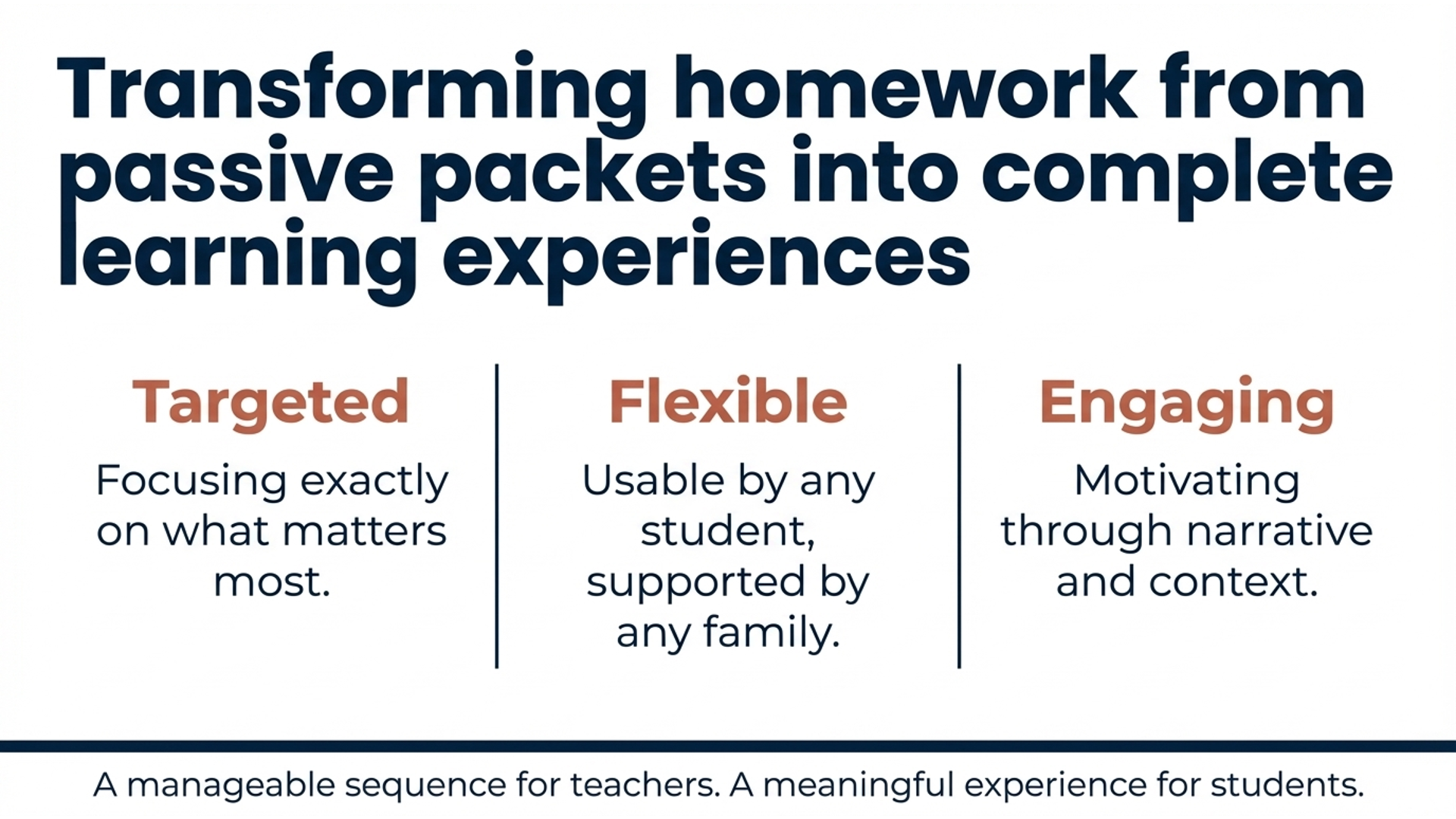
This approach transforms homework from something passive and disconnected into something targeted, flexible, and engaging. Instead of sending home packets, the teacher sends home a complete, differentiated learning experience—one that students can actually use, families can support, and that directly builds the skills that matter most..
Overview Video
Infographic
Demo Video
Slideshow