I’m a new teacher and I need help”
Driven by passion, grounded by values. We're a team of passionate thinkers and doers, dedicated to building with purpose and clarity. Collaboration and curiosity drive everything we do.
Ms. Nguyen, a first-year teacher, is sitting in her classroom after school with tomorrow’s reading in front of her. She knows what students are supposed to read, but she’s not yet sure how to turn it into strong instruction. She’s thinking about what to say, how to explain the skill, and how to guide students through it. She realizes she doesn’t just need help with the content—she needs help with the skill and with the teaching of that skill.
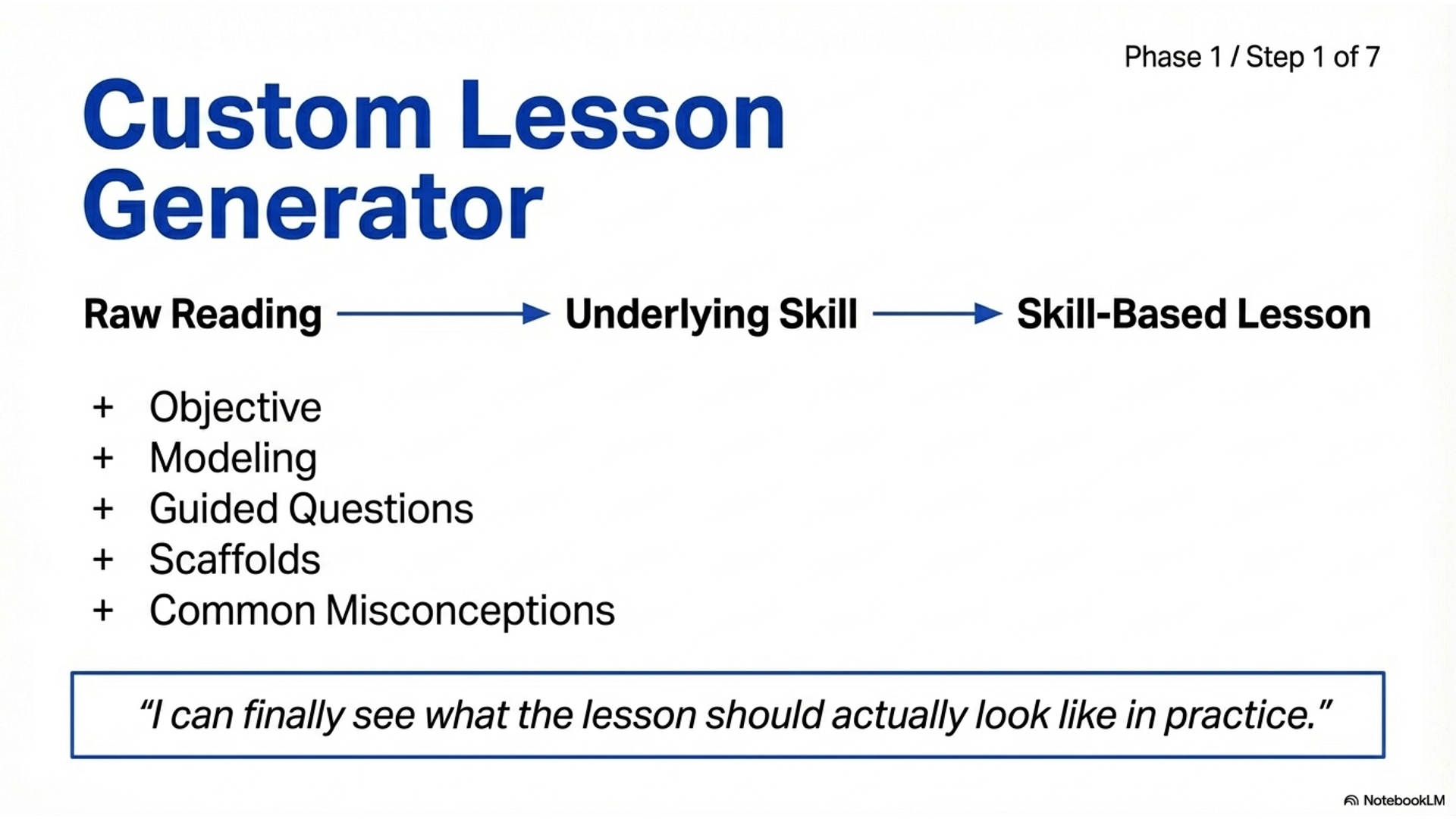
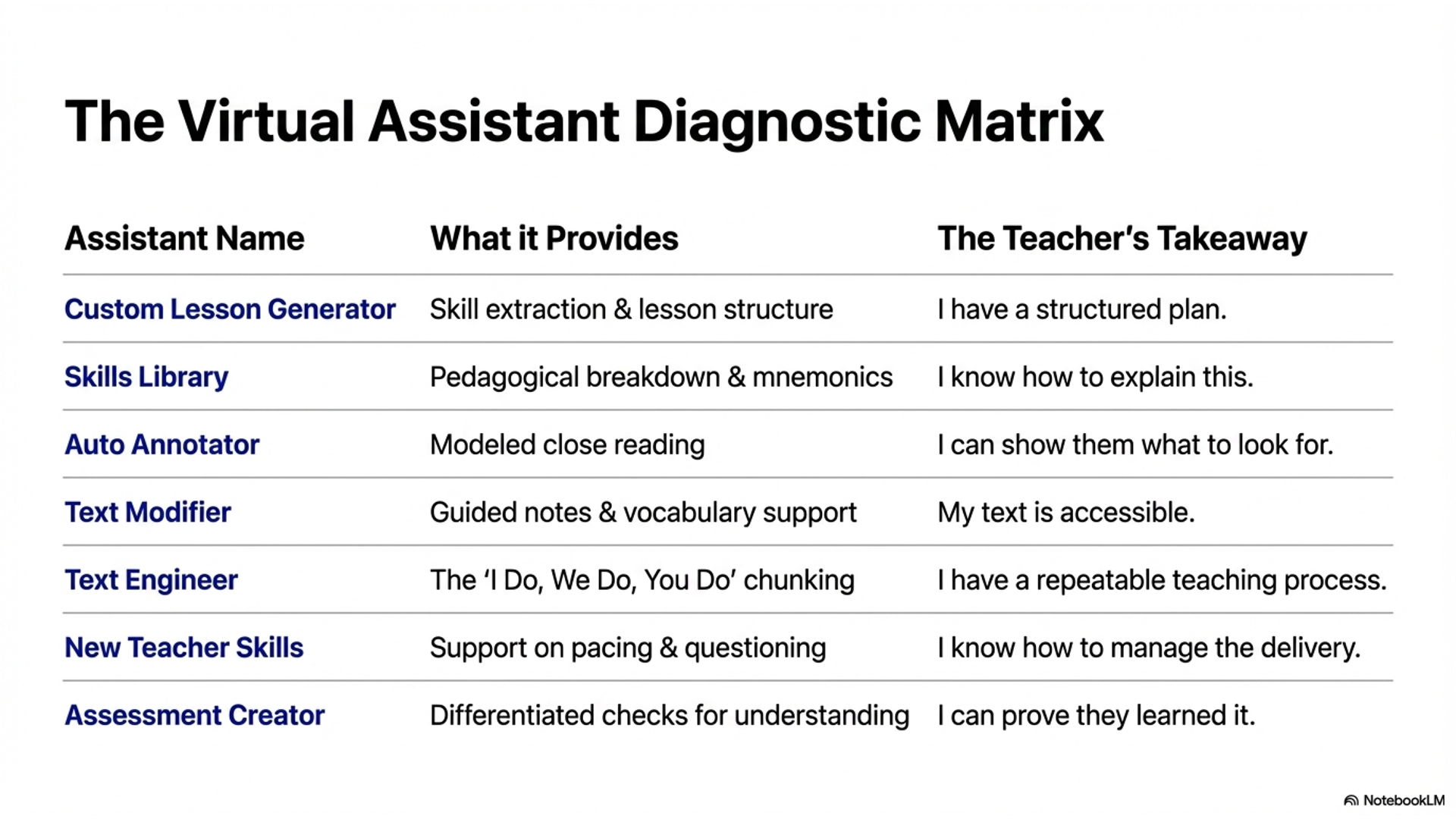
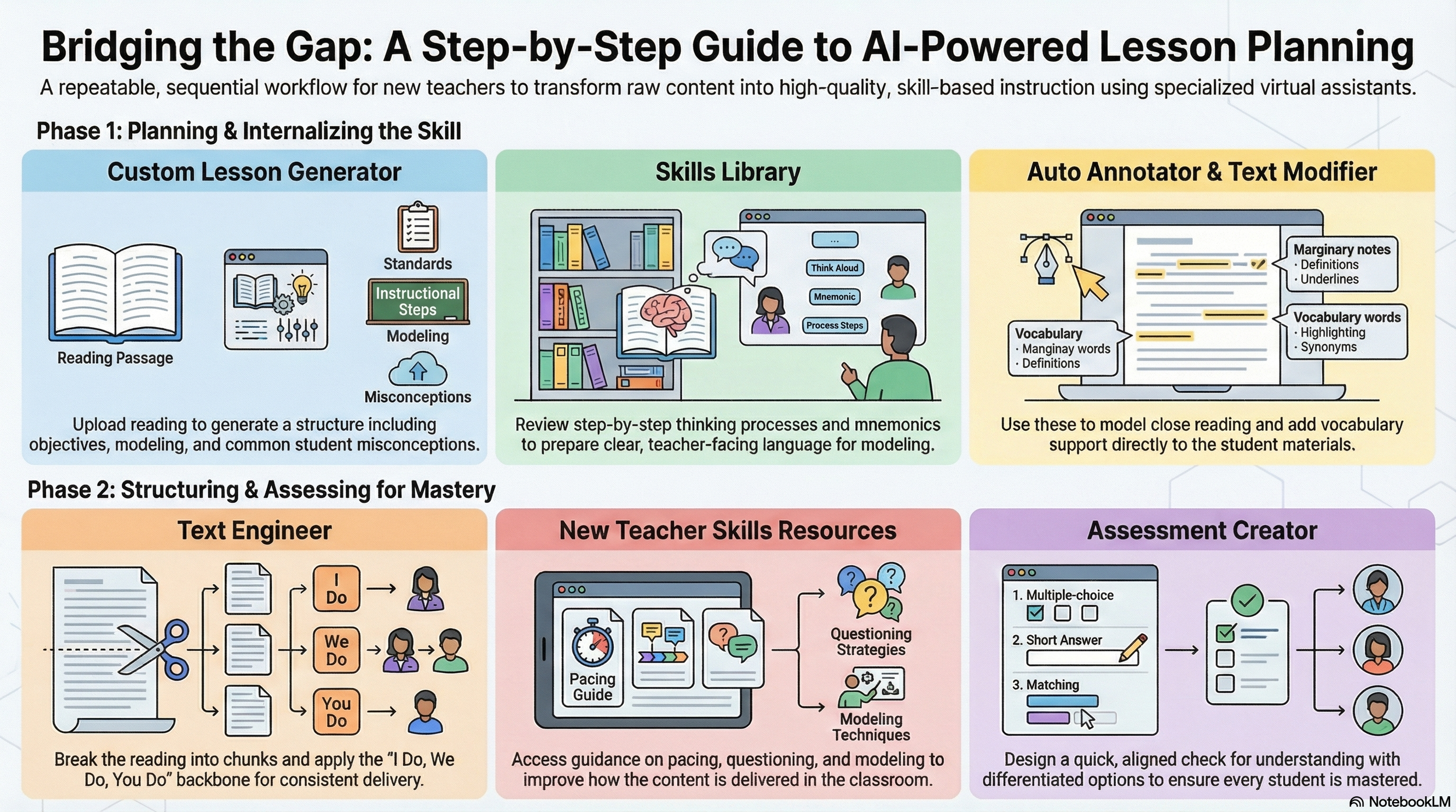
She starts with the Custom Lesson Generator, uploading the reading. The tool identifies the underlying skill—such as analyzing central idea or interpreting evidence—and builds a full, skill-based lesson. It gives her a clear structure: objective, modeling, guided questions, scaffolds, and common misconceptions. Now she can see what the lesson should actually look like in practice.
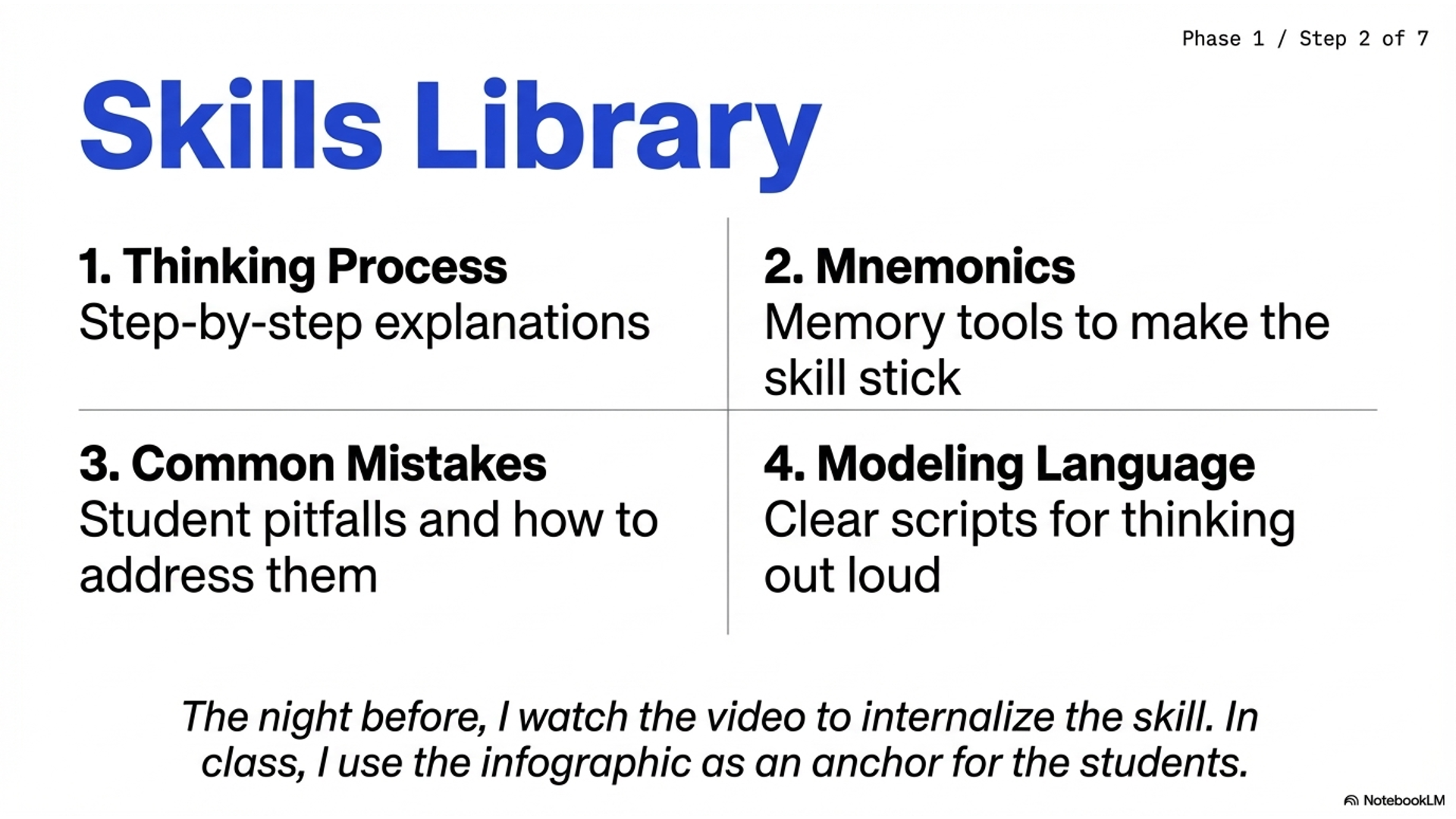
To prepare herself, she turns to the Skills Library—not just for student materials, but for teacher-facing guidance on how to explain the skill clearly. She reviews a breakdown of the skill that includes:
Step-by-step explanations of the thinking process
Mnemonics and memory tools to make the skill easier to teach and remember
Common student mistakes and how to address them
Clear language she can use when modeling the skill out loud
The night before, she watches the video and studies the infographic to internalize the skill. During the lesson, she uses the infographic as an anchor to explain it to students. Afterward, she can revisit the podcast or tutoring scripts to reinforce how the skill should sound when explained clearly.
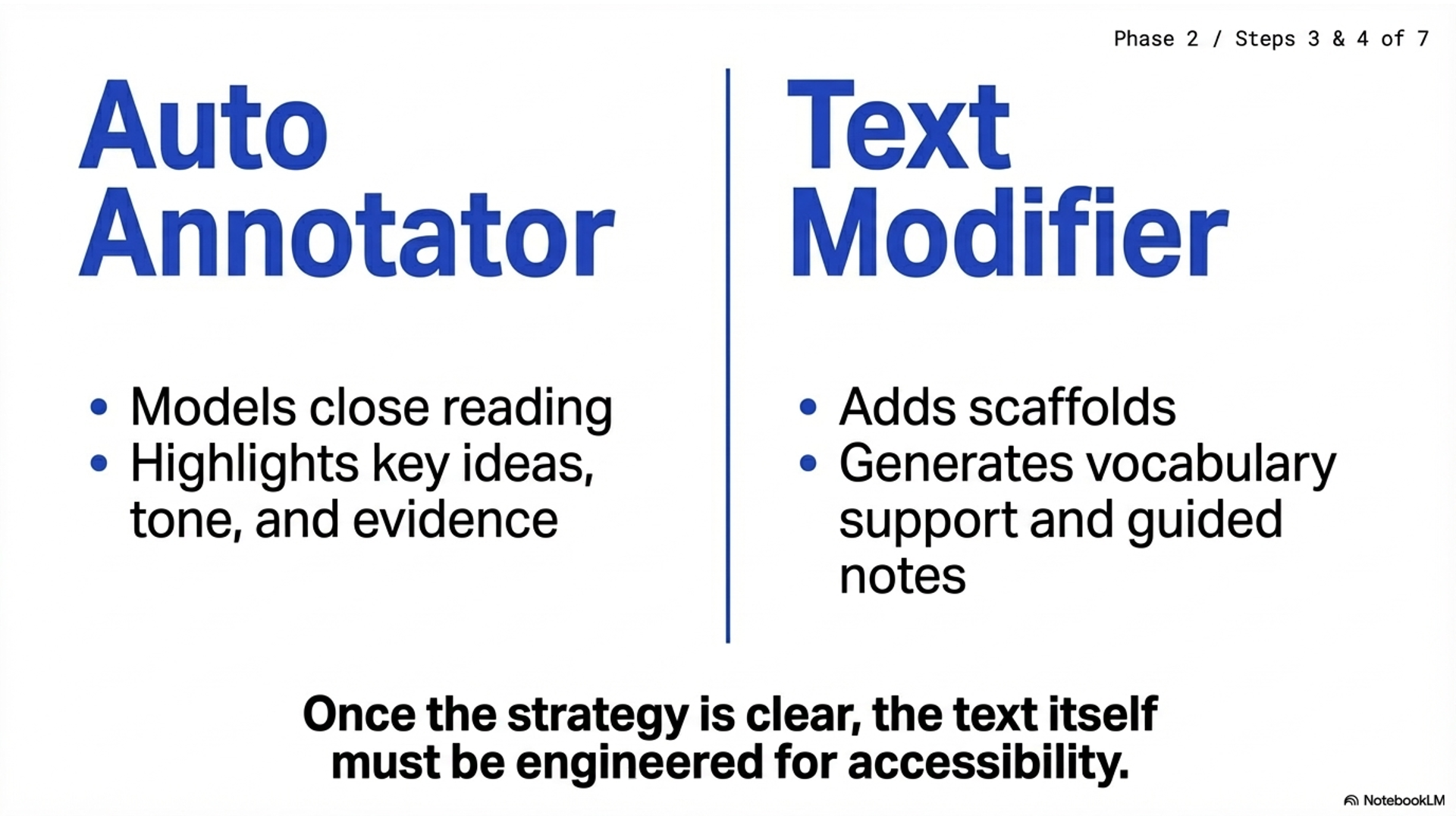
To strengthen the reading itself, she uses multiple supports. She uploads it into the Auto Annotator to model close reading and highlight key ideas, tone, and evidence. She uses the Text Modifier to add scaffolds like vocabulary support and guided notes.
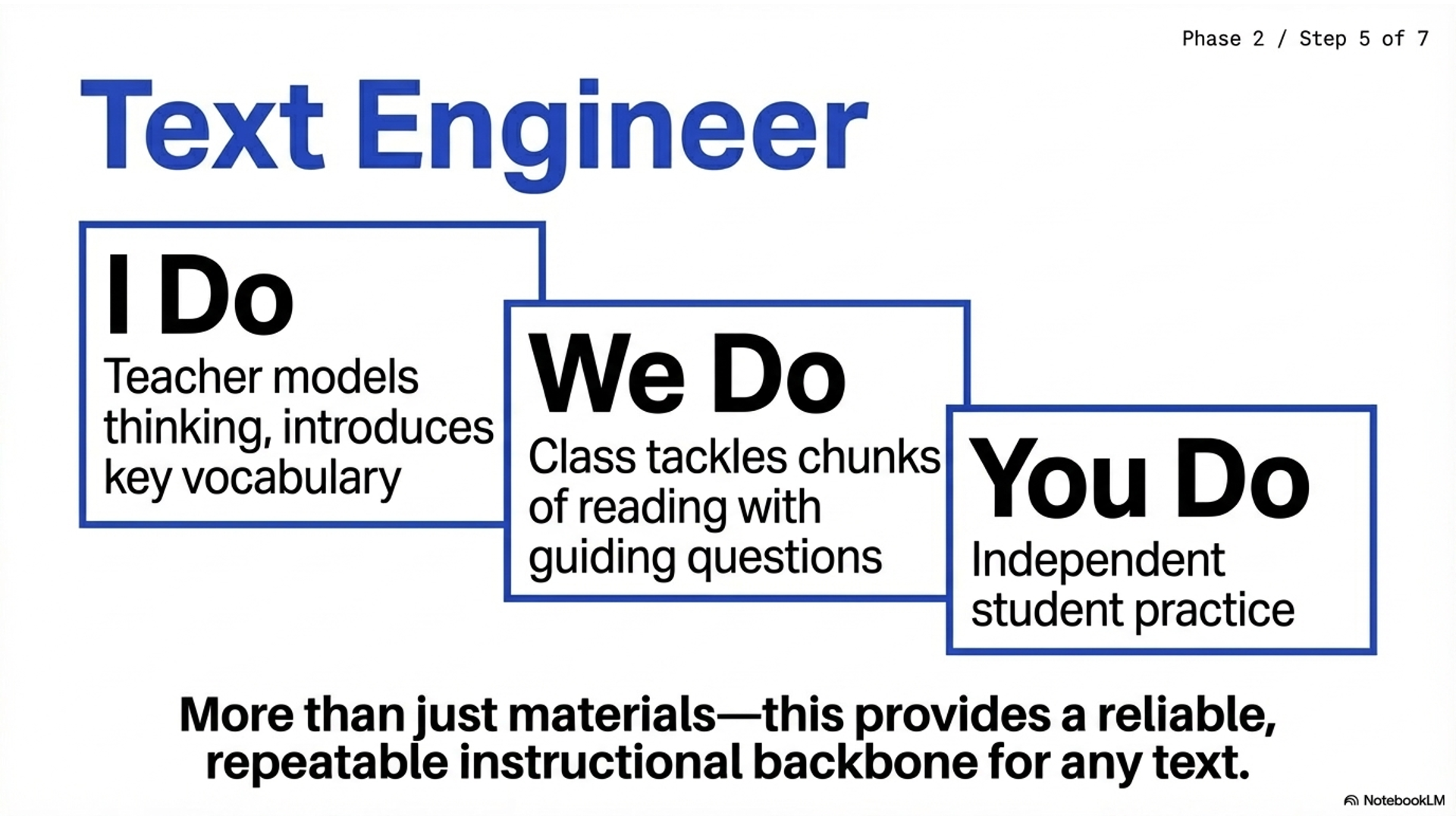
She also uses the Text Engineer as a reliable instructional backbone. It breaks the reading into chunks, adds guiding questions, identifies key vocabulary, and structures the lesson into clear “I Do, We Do, You Do” steps. For a new teacher, this gives her not just materials—but a repeatable process she can follow every time she teaches a text.
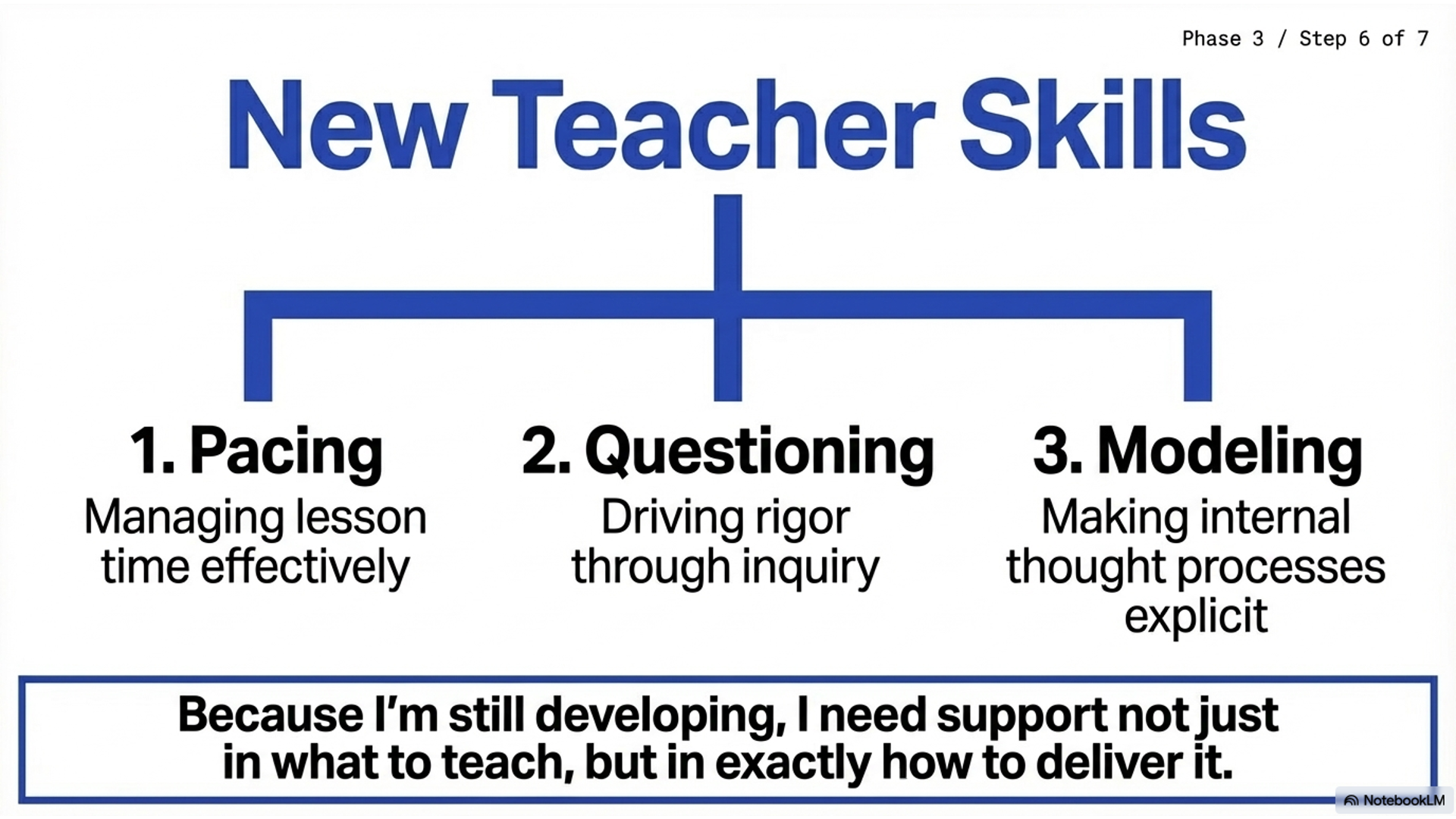
Because she’s still developing as a teacher, she also uses the New Teacher Skills resources, which help her think about pacing, questioning, and how to model thinking more effectively—giving her support not just in what to teach, but in how to teach it well.
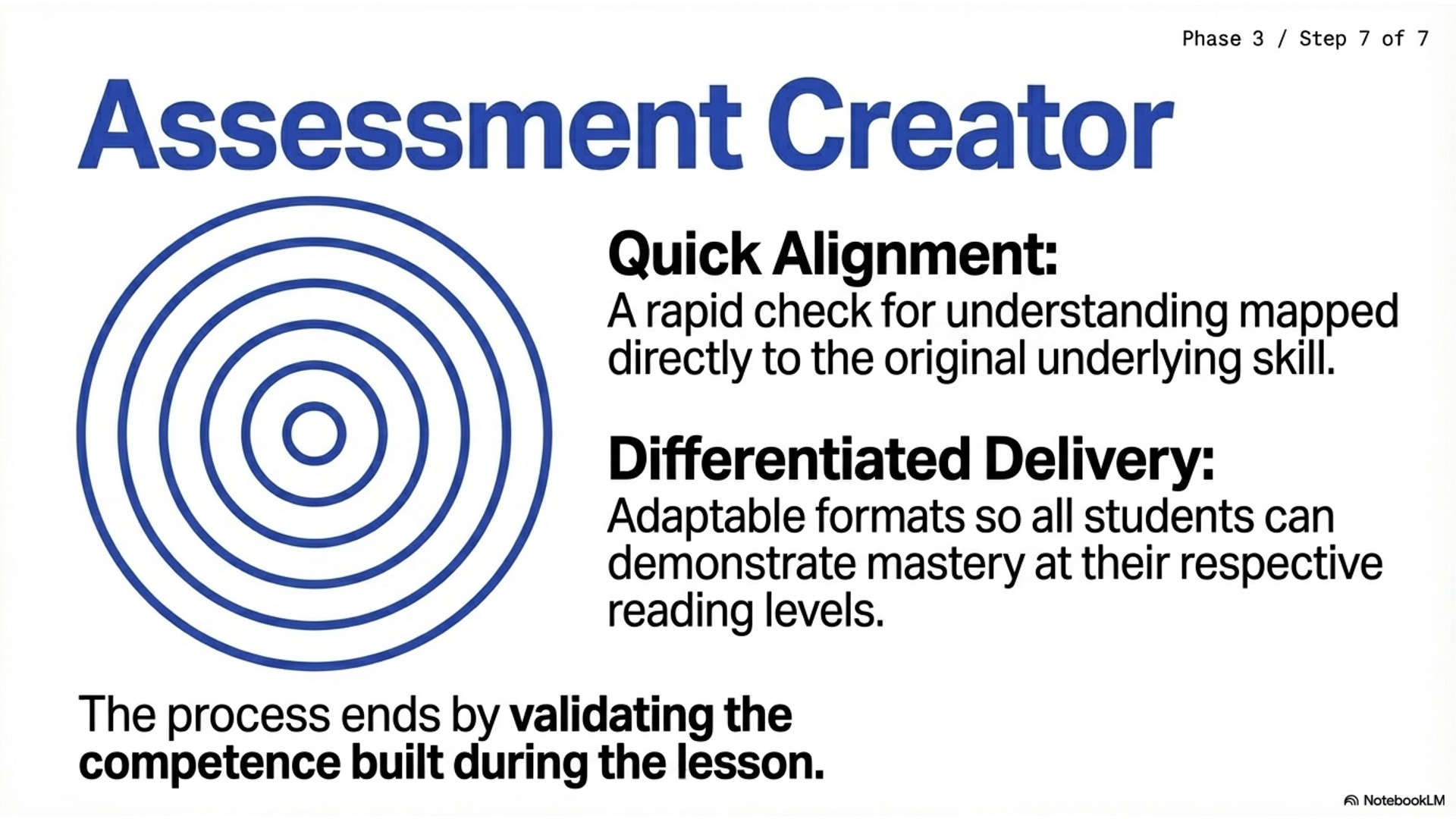
Finally, she uses the Assessment Creator to design a quick, aligned check for understanding, with the option to differentiate it so all students can demonstrate the same skill at their level.
By the end of this process, Ms. Nguyen is no longer guessing how to teach the lesson. She has a clear explanation of the skill, a structured lesson, a repeatable teaching process, and the language to deliver it effectively.
This solves a core problem for new teachers: not just planning a lesson, but learning how to turn content into explicit, skill-based instruction they can confidently explain and deliver.
Slideshow